
Ivindo National Park

Country
Gabon
Inscribed in
2021
Criteria
(ix)
(x)
The conservation outlook for this site has been assessed as "good with some concerns" in the latest assessment cycle. Explore the Conservation Outlook Assessment for the site below. You have the option to access the summary, or the detailed assessment.
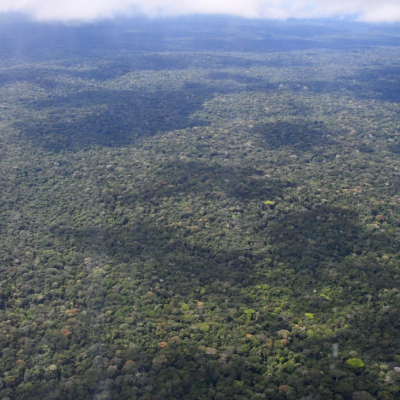
Situated on the equator in northern Gabon the largely pristine site encompasses an area of almost 300,000 ha crossed by a network of picturesque blackwater rivers. It features rapids and waterfalls bordered by intact rainforest, which make for a landscape of great aesthetic value. © UNESCO
Summary
2025 Conservation Outlook
Finalised on
11 أكتوبر 2025
Good with some concerns
Current state and trend of VALUES
Good
Overall THREATS
Overall PROTECTION and MANAGEMENT
Full assessment
Description of values
Great diversity of forest formations
Criterion
(ix)
Large areas of very old Caesalpinioideae forests, and monodominant Julbernardia pellegriniana or Eurypetalum batesii forests represent a characteristic stage of forest evolution in Central Africa that have disappeared elsewhere in Lower Guinea. The presence of the Langoué Baï and grassy meadows identical to those of the inselbergs contribute to the uniqueness of the region (ANPN, 2020; WHC, 2021).
Fish speciation
Criterion
(ix)
The black waters of the Ivindo are home to a swarm of some fifteen species of fish of the genus Paramormyrops (Mormyridae) – the only swarm of species found in rivers worldwide belonging to this family. It is one of the world's best examples of speciation in open waters in which the speciation process takes place at a very high rate (ANPN, 2020; WHC, 2021).
Endemic and threatened plants
Criterion
(x)
The intact forest ecosystem of Ivindo National Park and the Ivindo Landscape Area, with its diversity of habitats, is home to 161 plant species of high conservation value, 129 species endemic to Gabon and 35 species endemic to Ivindo. Ivindo National Park alone is home to 81 threatened plant species (ANPN, 2020; WHC, 2021).
Threatened mammals
Criterion
(x)
Ivindo alone is home to 126 species of mammals, including seven species of primates endemic to Lower Guinea. Threatened species include the western lowland gorilla (Gorilla gorilla), the chimpanzee (Pan troglodytes) and the forest elephant (Loxodonta cyclotis). The forest elephant population is relatively large and includes many males with very large tusks, which is becoming very rare in much of Central Africa (ANPN, 2020; WHC, 2021).
Endemic and threatened Guinean-Congolese forest birds
Criterion
(x)
Ivindo National Park avifauna includes 190 (68%) of the 278 forest species native to the Guinean-Congolese region and five of the six species endemic to Lower Guinea, including the threatened grey parrot (Psittacus erithacus) (ANPN, 2020; WHC, 2021).
Exceptional aquatic species
Criterion
(x)
The rivers of the property are home to ichthyofauna of global importance and characterized by exceptional endemism, including 45 species of fish endemic to Lower Guinea, 13 of which are endemic to Gabon. 16 fish species are exclusive to the Ivindo River, with a particular wealth of Cyprinodontiformes and Mormyridae, and very specialized and fragile species of the genus Ivindomyrus, named after the Ivindo River. A dozen species of slightly electric fish of the genus Paramormyrops (Mormyridae) form swarms of freshwater fish that are globally rare. The slender-snouted crocodile (Mecistops cataphractus) also occurs here. The Kongou Falls are home to seven species of Podostemaceae, very specialized, rare and very vulnerable plants that are everywhere threatened by the construction of dams and the regulation of rivers. These seven species represent both 44% of the Podostemaceae flora of Gabon and the four known genera of the country (ANPN, 2020; WHC, 2021).
Exceptional invertebrate diversity
Criterion
(x)
Linked to the forest is an extraordinary invertebrate diversity, such as 528 species of diurnal butterflies (probably 800-1000), many of which appear to be restricted to very old-growth Caesalpinioideae forests (ANPN, 2020; WHC, 2021).
Assessment information
The property so far exhibits an exceptional integrity. While the forest elephant population appears stable, there is human-elephant conflict in the north of the park, and it is possible that there is a decline in "big tuskers". Commercial hunting by non-local people, such as workers in the surrounding forestry concessions, gold miners, or poachers aided by logging roads increasing access could be a key threat but there is a lack of information regarding the impact on the World Heritage values.
Hunting, Collecting & Controlling Terrestrial Animals, Fishing, Harvesting & Controlling Aquatic Species
(Unsustainable bushmeat hunting and fishing)
Inside site
, Extent of threat not known
Outside site
In the north where people live near the park, the extent of hunting bushmeat (illegal in the park) and fishing (legal in the north up to the post of Pendo, ANPN, 2020) is likely localised. Commercial hunting by non-local people, such as workers in the surrounding forestry concessions, gold miners, or poachers aided by logging roads increasing access could be a greater threat. The sustainability of the fishing activities are unknown (Phyhälä et al., 2016; IUCN, 2021).
Other Human Disturbances
(Human/Elephant conflict)
Inside site
, Extent of threat not known
Outside site
Elephant poaching in Ivindo is far less than in other protected areas in Gabon, and the elephant population in the Park is “stable” although less “big tuskers” have been seen (ANPN, 2020). This might indicate either poaching, or else due to persecution the “big tuskers” are becoming more nocturnal. There is human/elephant conflict in the north of the property which is near habitations (ANPN, 2020; Mbamy et al., 2024).
Logging, Harvesting & Controlling Trees
(Logging concessions surrounding property)
Outside site
The forestry concessions surrounding the property are likely more positive than negative, especially those which are FSC-certified; although only 2 concessions have FSC certification, with 3 others in the process (State Party, 2024). This is because they strictly control access which in theory reduces poaching. While the concessions do not clear-fell (apart from the areas where they stock the logs), they selectively remove all the largest trees, including trees with fruit eaten by elephants (Mbamy et al., 2024). Nevertheless, a threat remains as roads built to enter the forest opens previously inaccessible areas to poachers (ANPN, 2020; IUCN, 2021).
Pathogens
(Ebola)
Inside site
, Extent of threat not known
Outside site
Ebola is an ever-present risk that probably affected the great apes in Ivindo but to a lesser extent than other protected areas such as Minkébé. It appears to have stabilised but could become a problem again in the future (ANPN, 2020).
A key potential threat is the Bélinga iron ore project that could impact the property in several ways, including increased population pressure, creation of a railway to transport the iron ore, and increased electricity needs (which might result in a transmission line running through the park). Other potential threats such as tourism, invasive ants, water pollution from gold mining, hydroelectric projects and climate change are currently considered low.
Water-borne & other effluent Pollution
(Water pollution)
Inside site
, Extent of threat not known
Outside site
Water pollution is currently not a threat, although rising human population pressure in Makokou and surrounding villages could increase water pollution. Particularly if the wood transforming school and factories which are part of local development plans materialise, which would necessitate the development of water purification plants before the waste water is dumped in the Ivindo River (ANPN, 2020).
Mining & Quarrying
(Gold mining and sand extraction)
Outside site
Traditional gold panning along the river in the park does not seem to be an issue (and sand extraction is very limited), although industrial gold mining activities could start further upstream. In case mercury is used to extract the gold, this could pose a pollution threat to the Ivindo River and needs to be controlled (ANPN, 2020).
Renewable Energy
(Booué and Tséngue-Leledi hydroelectric project)
Outside site
This flagship regional project for Central Africa (PIDA, 2023) on the Ogooué and Nyanga rivers to the south-west of the park is in progress. However, it seems to be downstream from the rivers in the park. According to the nomination documentation, a high tension wire needed to bring electricity from this dam to the Bélinga mine and to other countries in the region does not to affect the park (ANPN, 2020).
Mining & Quarrying
(Bélinga iron mine)
Outside site
The Bélinga iron mine project (Ivindo Irodn n.d.), 180 km north-east of the park, presents three potential threats to the property. First, sediment from the mine could pollute the Ivindo River, so decantation basins in the mine will be required to avoid mining sedimentation which would greatly affect the fish and plant biodiversity. Second, the electricity requirements for this mine could affect the property. Third, this and potentially other industrial mining activities in the TRIDOM region will likely have a profound impact on the landscape and possibly break up the current continuous forest with interconnected protected areas which is the case today. Immigrant workers will increase pressure on the natural resources particularly through forest clearance for agriculture and hunting for bushmeat and ivory. The construction of railways (elephants are often hit by trains) or special roads might have an even greater impact (ANPN, 2020; UNESCO, 2010).
Invasive Non-Native/ Alien Species
(Invasive ants)
Other invasive species names
Wassmannia auropunctata
Inside site
, Extent of threat not known
Outside site
The South American ant (Wassmannia auropunctata) has been introduced via forestry operations to the park and could have a negative effect on fauna (ANPN, 2020; IUCN, 2021).
Recreation & Tourism Areas
(Tourism)
Inside site
, Localised(<5%)
Visitor impact on the property is currently very low (Avomo Ndong, 2017; IUCN, 2021). The Management Plan envisages limited but high range tourism, but this has not materialised. The Management Plan outlines a plan to grant a tourism concession to build an eco-lodge next to the Kongou waterfalls where currently there is a visitors viewing platform (ANPN, 2020).
Changes in Temperature Regimes, Changes in Precipitation & Hydrological Regime
(Climate change)
Inside site
, Throughout(>50%)
Outside site
The large river network in the property indicates that Ivindo is better adapted to resist climate change than elsewhere (ANPN, 2020). However, a recent study in Lopé (Bush et al., 2020) has indicated that prolonged drought has severely reduced fruit in elephant feeding trees, making them forage more widely, which may result in increasing crop raids.
Involvement of stakeholders and rightsholders, including indigenous peoples and local communities, in decision-making processes
Customary rights of local populations are maintained in the law, with a mechanism, the “local consultative management committee” (CCGL) bringing together park management and local communities as well as other stakeholders including the forestry concessions (ANPN, 2020). However, the CCGL, presided by the Conservator of the park, doesn't appear to have met, with the Management Plan stating that the CCGL would be in place in 2016 (ANPN, 2016). There was no record of the CCGL functioning at time of inscription (IUCN, 2021). The CCGL was supposed to be renewed with new activities in 2024 (State Party, 2024) but it appears that the CCGL system does not work (IUCN Consultation, 2025). Local concerns include fishing, bushmeat hunting, plant collection and visitation of sacred site rights, gold panning and sand collection, elephant crop raiding, etc. (ANPN, 2016).
Legal framework
The park was created by decree in 2002, but full legal protection was only put into place in 2007, with additional laws on hunting and collection of non-timber products in 2011 and 2012 (ANPN, 2020). These laws appear adequate although weak. For example, the law would not stop extremely damaging activities, such as the construction of a hydro-electric plant along the park’s waterfalls, if this was deemed in the national interest (although the law states that any downgrading of a site needs to be compensated by an equivalent addition). Likewise, mining or oil prospection is not allowed (unless the Council of Ministers decrees it is necessary).
Governance arrangements
The “local consultative management committee” (CCGL), presided by the Conservator of the park, is inscribed in law, but is a consultative body. The Conservator of the park, who changes regularly, makes their staff. The Conservator reports to a higher authority in Libreville. The organigram of the park was not yet approved in the last Management Plan (ANPN, 2016).
Integration into local, regional and national planning systems (including sea/landscape connectivity)
No information available.
Boundaries
The park as well as the legal 5 km surrounding buffer zone is entirely under State ownership. Some small villages that occurred inside the park had been moved out during colonial times in the 1930’s to regroup all the villages alongside the Makokou-Ovan road (ANPN, 2020). There is some confusion regarding boundaries of the buffer zone, as private land to the north of the park appears to lie within the 5 km legally mandated buffer zone.
Overlapping international designations
The Ramsar site covers part of the Ivindo river and extends beyond the property. There also appears to be a project to designate Invindo as a Biosphere Reserve (UNESCO, 2024). The extent to which the overlapping international designations are effectively managed is not clear.
Implementation of World Heritage Committee decisions and recommendations
In 2021 the WH Committee requested an updated Management Plan for February 1, 2023 (the last Management Plan was for 2016-2020), and the same request was reiterated in 2024, for February 1, 2025. Due to the political transition this has not happened, but an updated Management Plan is in preparation (State Party, 2024). In 2021 the WH Committee recommended that all the logging concessions surrounding the park be FSC-certified. Today of 5 concessions bordering the park, 2 are FSC-certified, 2 are in the process and 1 has a Management Plan (State Party, 2024). To date there is no infrastructure or development project underway (State Party, 2024).
Climate action
No detailed information available. Although the State Party has signed an agreement (the Central African Forest Initiative) for funding from Norway of $150 million over 10 years, corresponding to the payment of carbon emission reductions to which the park has contributed (WHC, 2021).
Management plan and overall management system
A Management Plan for 2016-2020 (ANPN, 2016) exists. Delays caused by COVID-19 and the political transition in Gabon in 2023 delayed the updating process, but with funding from Norway it is now under way with the launch of the call for tenders in October 2023 (State Party, 2024).
Law enforcement
An anti-poaching unit and trained ecoguards (30 out of 40 ecoguard positions were filled, ANPN, 2020) are relatively well-equipped and work on a rotating basis. However, this is insufficient for a park the size of Ivindo. Also, the efficiency of law enforcement is largely dependent on the Conservator, who changes fairly regularly. Current staffing levels are unknown, although reports of ecoguards not being paid for months are recurrent (IUCN, 2021; IUCN Consultation, 2025).
Sustainable finance
Ivindo National Park receives financial and technical support from the State and its development partners, such as the French Development Agency (AFD), the United States Fish and Wildlife Service (USFWS) and the Wildlife Conservation Society (WCS), as well as in the framework of its participation in the Central African Forest Initiative (the State Party has signed an agreement for funding from Norway of $150 million over 10 years, corresponding to the payment of carbon emission reductions to which the park has contributed). The management of the property requires sufficient and long-term funding, which is ensured by its own resources and contributions from other partners (SoOUV, 2021; WHC, 2021). Since inscription it has been reported that the ecoguards, essential for protecting the property, go for months without being paid as their salaries are dependent on foreign donations (IUCN Consultation, 2025). There is no information on how much funding the State government contributes to the property, hopefully when the political situation stabilises this will become clearer. With the recent loss of funding of USAID, there is some cause for concern. The last Management Plan included activities budgeted at 10.6 million Euro (CFA 6.927.150.000), but with no indication of the budget the park actually received. A US $60 million collaboration by France and The Nature Conservancy has been announced (TNC, 2024), but again no indication on how much of this will go to the park.
Staff capacity, training and development
The nomination (ANPN, 2020) noted that the Conservator of Ivindo is seconded by a deputy as well as heads of operations, conservation, anti-poaching unit, tourism, and communication and environmental education. The total staff for Ivindo listed in the nomination is 72, with 53 positions filled. Of these, 30 out of 40 ecoguard positions are filled, plus operational staff (e.g. mechanic, boatmen, accountant, etc.). The Management Plan (ANPN, 2016) had fewer positions (e.g. 26 ecoguards) but outlined an ideal staffing scenario. No reports on training and development were available, but this is detailed and budgeted for in the Management Plan (ANPN, 2016).
Education and interpretation programmes
No information on education and interpretation programmes undertaken is available, but are detailed and budgeted for in the Management Plan (ANPN, 2016).
Tourism and visitation management
Tourism to this remote area has always been low (Lescuyer & Ntougou, 2006; Avomo Ndong, 2017), and after COVID-19 and then the political transition in 2023 there has been almost no tourism (IUCN, 2024). However, tourism plans are detailed and budgeted for in the Management Plan (ANPN, 2016).
Sustainable use
The only nearby communities lie in the north of the park, and some people fish along the Ivindo River up to a designated area above the Kongou Falls, but unknown to what extent this is sustainable (Pyhälä et al., 2016). The local community also collect NTFPs (Yobo & Ito, 2015), and hunt bushmeat, although both these activities are prohibited inside the park boundaries, causing conflict between the park management and local communities (Pyhälä et al., 2016).
Monitoring
A faunistic inventory by the IRET (Institut de Recherche en Ecologie Tropicale (IRET) is underway, and a phenological study on flowering and fruiting of trees was started beginning 2024 (State Party, 2024). Indicators for monitoring all activities are detailed and budgeted for in the Management Plan (ANPN, 2016).
Research
The Ipassa Research Station, situated inside the park at its northern entrance, has historically been globally important for tropical rainforest ecology in the 1980’s, but at time of inscription most activity seemed to have ceased (IUCN, 2021).The Tropical Ecology Research Institute (IRET) is responsible for Ipassa and coordinates research. International research organisations such as the Missouri Botanic Gardens continue to undertake research in and around Ivindo. Research activities are detailed and budgeted for in the Management Plan (ANPN, 2016).
Effectiveness of management system and governance in addressing threats outside the site
Although there is no up-to-date Management Plan, the effectiveness of the management system is largely up to the Conservator of the park, who can engage in adaptive management (IUCN Consultation, 2025). The park management has to deal with the surrounding logging concessions and potentially poachers who can enter the park more easily due to logging roads (although the logging companies police the roads and provide a barrier to entrance into the park). Lack of a clear management system and dependence on a strong Conservator to manage external threats outside the site is cause for concern.
Effectiveness of management system and governance in addressing threats inside the site
As mentioned above, the effectiveness of the management system is largely up to the Conservator of the park, who can engage in adaptive management (IUCN Consultation, 2025). While the level of threat inside the site is low, the park management still has to deal with conflict with the local community to the north which enter the park for hunting and NTFP collection, and to ensure law enforcement prevents poaching inside the park elsewhere (not easy for such a large area covering nearly 300,000 ha and buffer zone of over 182,000 ha,). Lack of a clear management system and dependence on a strong Conservator to manage threats inside the site is cause for concern.
Ivindo has some form of natural protection due to its size and low human population pressure. Community engagement in the north needs improvement, as while there are processes in place (the "local consultative management committee" CCGL), they don't seem to be used, and local people are not seeing benefit from living next to a protected area, but rather a constraint. Even if an updated Management Plan, as has been requested since the last one finished in 2020, is produced, it will only be effective if there is buy-in and agreement with the local communities as well as with the logging concessions which surround most of the park. Transparency with park finances, and published monitoring work to assess management and protection is also needed.
Great diversity of forest formations
Good
Trend
Data Deficient
Despite lack of published monitoring data, the size of the property, protection in place, low current threat and no reports to the contrary indicate that the state of this value is good and likely stable.
Fish speciation
Good
Trend
Data Deficient
Despite lack of published monitoring data, the size of the property, protection in place, low current threat and no reports to the contrary indicate that the state of this value is good and likely stable.
Endemic and threatened plants
Good
Trend
Data Deficient
Despite lack of published monitoring data, the size of the property, protection in place, low current threat and no reports to the contrary indicate that the state of this value is good and likely stable.
Threatened mammals
Good
Trend
Data Deficient
Despite lack of published monitoring data, the size of the property, protection in place, low current threat and no reports to the contrary indicate that the state of this value is good and likely stable. There are still many forest elephants that use the park and the surrounding areas (ANPN, 2020; IUCN Consultation, 2025).
Endemic and threatened Guinean-Congolese forest birds
Good
Trend
Data Deficient
Despite lack of published monitoring data, the size of the property, protection in place, low current threat and no reports to the contrary indicate that the state of this value is good and likely stable.
Exceptional aquatic species
Good
Trend
Data Deficient
Despite lack of published monitoring data, the size of the property, protection in place, low current threat and no reports to the contrary indicate that the state of this value is good and likely stable.
Exceptional invertebrate diversity
Good
Trend
Data Deficient
Despite lack of published monitoring data, the size of the property, protection in place, low current threat and no reports to the contrary indicate that the state of this value is good and likely stable.
Assessment of the current state and trend of World Heritage values
Data Deficient
Despite lack of published monitoring data, the size of the property, protection in place, low current threat and no reports to the contrary indicate that the state of the property's values is good and stable. However, monitoring data is urgently needed to accurately assess the state and trend of values.
Additional information
Carbon sequestration,
Water provision (importance for water quantity and quality)
The large area (almost 300,000 ha and over 182,000 ha buffer zone) of intact and unexploited forest are an important source of carbon sequestration and water provision.
Importance for research
The Impassa Research Station was globally known for its work on tropical rainforest ecology in the 1980's, and research is continuing today unter the Tropical Ecology Research Institute (IRET).
Sacred natural sites or landscapes
The property contains a number of sacred natural sites or landscapes including the impressive Kongou Waterfall, which sadly is more accessible to foreign visitors than to people from the local community (who can visit the site when they act as guides).
Provision of jobs,
Tourism-related income
The contribution to the local economy is low. Some ecoguards are hired from the local community providing revenue. Tourism is almost non-existent, with local guides rarely guiding visitors in the property. Some income or subsistence is derived from the fishing rights that the local community have in the park.
One of the complaints from the local community is that they have not received financial benefits from the Park, but rather loss when elephants raid their crops, or they can no longer hunt and collect NTFPs in the Park.
The greatest benefit of such a large and unexploited forest is in its environmental services (carbon sequestration, water provision). The property was renowned for its importance for research and contains several sacred natural sites or landscapes, including some spectacular waterfalls. The property provides minor benefits to the local economy through some provision of jobs and income from fishing rights, but this is countered by the constraints of not being allowed to hunt or collect NTFPs in the park and human-elephant conflict.
References
| № | References |
|---|---|
| 1 |
ANPN (2016). Plan de gestion du parc national de l'Ivindo 2016-2020. Agence Nationale des Parcs Nationaux (Parcs Gabon), Wildlife Conservation Society, WWF, US Forest Service, US Fish & Wildlife Service, USAid, Wildlife without Borders, EU. 73 pp.
|
| 2 |
ANPN (2020). Nomination du Parc national de l'Ivindo (Gabon) pour la Liste du patrimoine mondial. Agence nationale des parcs nationaux (ANPN), Gabon. 2 vols.
|
| 3 |
Avomo Ndong, S.S. (2017). Human-wildlife conflict and ecotourism: comparing Pongara and Ivindo National Parks in Gabon. Thesis, University of Oregon. 143 pp.
|
| 4 |
Bush, E.R., Whytock, R.C., Bahaa-el-din, L., Bourgeois, S., Bunnefeld, N., Cardoso, A.W., Thoussaint Dikangadissi, J., Dimbonda, P., Dimoto, E., Edzang Ndong, J., Jeffery, K.J., Lehmann, D., Makaga, L., Momboua, B., Momont, L.R.W., Tutin, C.E.G., White, L.J.T., Whittaker, A. & Abernethy, K. (2020). Long-term collapse in fruit availability threatens Central African forest megafauna. Science, 370(6521), 1219-1222.
|
| 5 |
IUCN (2021). World Heritage Nomination - IUCN Technical Evaluation, Ivindo National Park (Gabon). In: IUCN World Heritage Evaluations 2021, IUCN Evaluations of nominations of natural and mixed properties to the World Heritage List. WHC/21/44.COM/INF.8B2. [online] Gland, Switzerland.
Available at https://whc.unesco.org/en/list/1653/documents/ |
| 6 |
IUCN Consultation (2025). IUCN World Heritage Confidential Consultation (pers. comm.): Ivindo National Park, Gabon.
|
| 7 |
Ivindo Iron (n.d.) A new iron ore opportunity in Gabon: The Belinga Project. Ivindo Iron at a glance. Available at: https://ivindoiron.ga/en
|
| 8 |
Lescuyer, G. & Ntougou, O. (2006). L’évaluation économique du Parc National de l’Ivindo au Gabon : une estimation des bénéfices attendus de la conservation de la nature en Afrique centrale. Rapport final préparé dans le cadre du Programme Sectoriel de Valorisation des Aires Protégées au Gabon (PSVAP Composante 2). Parcs Gabon, IRET, CIFOR. 54pp.
|
| 9 |
Mbamy, W., Berne, C., Froese, G.Z.L., Ebanega, M.O. & Poulsen, J.R. (2024). Linking crop availability, forest elephant visitation and perceptions of human–elephant interactions in villages bordering Ivindo National Park, Gabon. Oryx 58(2): 261-268.
|
| 10 |
PIDA (2023). Development of the booue and tsengue leledi hydroelectric sites and construction of transmission lines. Published online 6 September 2023. Available at: https://www.au-pida.org/project/development-of-the-booue-an…
|
| 11 |
Pyhälä, A., Orozco, A.O. & Counsell, S. (2016). Protected Areas in the Congo Basin: Failing Both People and Biodiversity? Rainforest Foundation UK. 141 pp.
|
| 12 |
SoOUV (2021). Decision 45 COM 8B.76 Ivindo National Park (Gabon) Statement of Outstanding Universal Value. In: Decisions adopted by the World Heritage Committee at its 45th Session (Riyadh, Saudi Arabia). Available at: https://whc.unesco.org/en/list/1653/
|
| 13 |
State Party (2024). Report of the State Party to the World Heritage Committee on the state of conservation of Ivindo National Park (Gabon). Available at: https://whc.unesco.org/en/list/1653/documents/
|
| 14 |
TNC (2024). US $60 Million Collaboration to Protect Gabon’s Forests and Combat Climate Change. The Nature Conservancy Newsroom. Published online 28 October 2024. Available at: https://www.nature.org/en-us/newsroom/france-supports-gabon…
|
| 15 |
UNESCO (2010). World Heritage in the Congo Basin. UNESCO World Heritage Centre. UNESCO World Heritage Centre, Paris, France, 63 pp. Available at: https://whc.unesco.org/uploads/activities/documents/activit…
|
| 16 |
UNESCO (2024). Vers une réserve de biosphère dans le parc national de l’Ivindo. UNESCO Published online 29 November 2023. Available at: https://www.unesco.org/fr/articles/vers-une-reserve-de-bios…
|
| 17 |
WHC (2021). Ivindo National Park (Gabon) Decision 44 COM 8B.31. World Heritage Committee, available at: https://whc.unesco.org/en/decisions/7950.
|
| 18 |
Yobo, C.M. & Ito, K. (2015). Trade of the most popular indigenous fruits and nuts, threats and opportunities for their sustainable management around the Ivindo National Park (INP), Gabon. Intl. J. of Biodiversity and Conservation 7(2): 85-102.
|