
The Flow Country

Country
United Kingdom of Great Britain and Northern Ireland (UK)
Inscribed in
2024
Criterion
(ix)
The conservation outlook for this site has been assessed as "good" in the latest assessment cycle. Explore the Conservation Outlook Assessment for the site below. You have the option to access the summary, or the detailed assessment.
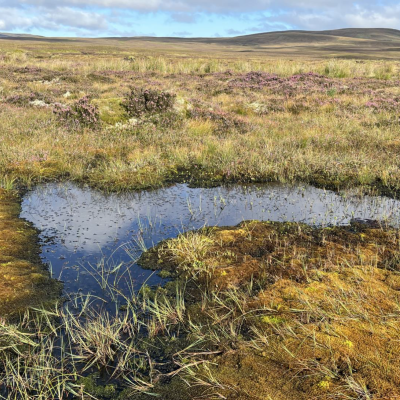
The serial property, located in the Highland Region of Scotland, is considered the most outstanding example of an actively accumulating blanket bog landscape. This peatland ecosystem, which has been accumulating for the past 9,000 years, provides a diversity of habitats home to a distinct combination of bird species and displays a remarkable diversity of features not found anywhere else on Earth. Peatlands play an important role in storing carbon and the property’s ongoing peat-forming ecological processes continue to sequester carbon on a very large scale, representing a significant research and educational resource. © UNESCO
Summary
2025 Conservation Outlook
Finalised on
11 oct 2025
Good
Current state and trend of VALUES
Good
Overall THREATS
Overall PROTECTION and MANAGEMENT
Full assessment
Description of values
Most outstanding example of a blanket bog ecosystem in the world
Criterion
(ix)
The Flow Country is considered the most outstanding example of a blanket bog ecosystem in the world. This blanket peat and its intricate network of pools, hummocks and ridges stretches across nearly 190,000 ha of the northern mainland of Scotland. Including the full range of habitats from pools to drier hummock microsites including elements of damaged bog, transitional bog, and fen communities, the Flow Country is a type reference for a rare and threatened ecosystem (IUCN, 2024).
Ongoing peat-forming ecological processes
Criterion
(ix)
Ongoing peat-forming ecological processes continue to sequester carbon on a very large scale. The peat has been accumulating for the past 9,000 years and displays a remarkable range of features resulting
from the climatic, altitudinal, geological and geomorphological gradients found across the region. Peatlands play an important role in storing carbon, and The Flow Country has an extensive record of peatland accumulation, with peat thicknesses which reach over eight metres. The Flow Country is considered the most extensive and diverse example of an actively accumulating blanket bog landscape globally. Distinctive forms of blanket bog have evolved and are actively accumulating, exhibiting a diverse mosaic of mire and vegetation types with their associated species assemblages (IUCN, 2024). The property holds between 29 and 34 peat forming
species of Sphagnum moss, which are themselves home to complex assemblages of unique microorganisms adapted to survive in the low oxygen, cold temperature, acidity, and oligotrophy conditions of bog systems, adding to the biodiversity value of peatland habitats, and which also provide refuge for many breeding bird species. The property hosts a particular biodiversity assembly with specific communities composed of Atlantic, boreal and arctic taxa (IUCN, 2024).
from the climatic, altitudinal, geological and geomorphological gradients found across the region. Peatlands play an important role in storing carbon, and The Flow Country has an extensive record of peatland accumulation, with peat thicknesses which reach over eight metres. The Flow Country is considered the most extensive and diverse example of an actively accumulating blanket bog landscape globally. Distinctive forms of blanket bog have evolved and are actively accumulating, exhibiting a diverse mosaic of mire and vegetation types with their associated species assemblages (IUCN, 2024). The property holds between 29 and 34 peat forming
species of Sphagnum moss, which are themselves home to complex assemblages of unique microorganisms adapted to survive in the low oxygen, cold temperature, acidity, and oligotrophy conditions of bog systems, adding to the biodiversity value of peatland habitats, and which also provide refuge for many breeding bird species. The property hosts a particular biodiversity assembly with specific communities composed of Atlantic, boreal and arctic taxa (IUCN, 2024).
Diversity of habitats supporting a distinctive assemblage of birds
The Flow Country blanket bog also provides a diversity of habitats, combined with the patchwork of connected farming and coastal landscape elements within the wider setting. The area supports a distinctive assemblage of birds, with a combination of arctic-alpine and temperate and continental species (IUCN, 2024).
Assessment information
The highest threats to the OUV are climate change and wind turbines. Any approval of wind turbines within the boundaries of the property would constitute a clear threat to the OUV. Two proposed wind turbine developments within the boundaries have been objected to by the Highland Council, the regional planning authority. The Scottish Planning Policy states that World Heritage properties and other protected areas should have significant protection from harmful developments. Local land-uses are limited because of the low density of the resident population, the remoteness of the Flow Country at the far northern end of Scotland’s mainland, and the limited number and size of access roads to the blanket bog landscape.
Changes in Precipitation & Hydrological Regime
(Climate change drying out bogs and reducing bog growth)
Inside site
, Throughout(>50%)
Current threats include global climate change that will drive the essential climate for blanket bog development from one of cool summers and mild winters with rainfall throughout the year to one with hotter drier summers and warmer wetter winters, with more extreme weather events. The most likely problematic impact of this change is the drying out of the bogs through drier periods and the commensurate reduction in bog growth which will in turn increase carbon emissions, increase the risk of wildfires, and reduce the abundance of typical bog species, notably breeding migratory birds reaching their southernmost distribution limit in the Flow Country and could move further north (IUCN, 2024). Furthermore, there is a high threat from climate change for the hydrological connectivity across the site and between mire units, affecting the entire macrotope and disrupting the network. The scale of the property and its current good condition provides some resilience to wildfire, which restoration activities can increase (Andersen et al., 2024).
Renewable Energy
(Wind turbine construction, maintenance and decommissioning)
Inside site
, Extent of threat not known
Outside site
In the vicinity of the property, a large number of wind turbines have been constructed, approved or are under construction. More wind turbines have been proposed, including some within the boundaries of the property. Wind farm construction threatens the attributes of OUV under criterion (ix) as peatlands can be degraded by supporting infrastructure and vehicular traffic in construction, maintenance, and decommissioning. Furthermore, wind turbines may pose a threat to avian species, which are an integral component of the ecosystem. In the context of the current policy to develop a carbon neutral economy, further development plans for wind farms may prove a particular challenge. Many wind turbines exist within the perimeter of the serial site, and boundaries were carefully drawn to exclude existing turbines (IUCN, 2024).
Furthermore, the proper application of the National Planning Framework 4 in Scotland, which provides protection to World Heritage, allows for the full assessment of impact on OUV of any development. NatureScot as the statutory nature conservation agency has implemented guidance for the assessment of development on the OUV which will assist in providing advice to decision makers on the protection of OUV. Therefore, the planning system provides the appropriate protection to the OUV in respect of the effects of development proposals either within the site or outside it.
Furthermore, the proper application of the National Planning Framework 4 in Scotland, which provides protection to World Heritage, allows for the full assessment of impact on OUV of any development. NatureScot as the statutory nature conservation agency has implemented guidance for the assessment of development on the OUV which will assist in providing advice to decision makers on the protection of OUV. Therefore, the planning system provides the appropriate protection to the OUV in respect of the effects of development proposals either within the site or outside it.
Recreational Activities, Other Human Disturbances
(Numerous local land uses)
Inside site
, Extent of threat not known
Outside site
The management plan lists seven potentially significant local threats, including plantation of woodlands, livestock and game management, wildfires and burning for land-management, drainage, and windfarms as well as major developments (potential hydroelectric schemes and satellite launch station) (State Party of United Kingdom of Great Britain and Northern, 2023b). In the landscape surrounding the property, agricultural and tourist land-uses are more intensive than within the boundaries. However, these land-uses are limited because of the low density of the resident population, the remoteness of the Flow Country at the far northern end of Scotland’s mainland, and the limited number and size of access roads to the blanket bog landscape. Local residents live mainly in the surroundings of the blanket bog landscape and use land inside the property only for sheep grazing on communal slopes, for deer stalking and for some hiking. The latter is limited due to the small number of existing paths and tracks, and the high soil water level in the blanket bog ecosystem requiring special equipment to penetrate bog areas (IUCN, 2024).
While World Heritage inscription could increase visitation, and thereby require additional infrastructure, visitor numbers inside the blanket bogs are unlikely to increase exponentially, given the difficulty of access to the waterlogged land beyond existing hiking trails. Major developments mentioned in the management plan include potential hydroelectric schemes and a satellite launch station. Dams will be considered on a case-by-case basis and are likely, but not necessarily, to be outside of the Site itself. The satellite launch station would include a control centre, 2.5 km of road and a launch pad, occupying a total of just over 4 hectares of a 300ha peatland site outside the boundaries. This development has now been halted as the lead company has pulled funding, and the future of the site is uncertain.
Recreation & Tourism Areas
(Increased visitation and associated tourism infrastructure)
Inside site
, Extent of threat not known
Some stakeholders hope that a World Heritage property would bring more visitors and tourist revenues to the area and the local economies. Facilities such as tourist accommodation and essential services are mostly situated in the area surrounding the property. A recent “NC 500” marketing campaign for a motor touring route around the north coast of Scotland has increased the number of visitors. Should visitation increase, existing tourist facilities will need to be upgraded and possibly expanded. A single-track railway line and single-track roads cross the blanket bog landscape. Adding modest additional infrastructure (parking spaces, toilets, discovery trails) along these routes might not harm the blanket bog ecosystem if carefully planned. With increased visitor numbers, additional waste collections and access ranger patrols may become necessary. However, visitor numbers inside the blanket bogs are unlikely to increase exponentially, given the difficulty of access to the waterlogged land beyond existing hiking trails (IUCN, 2024).
Renewable Energy
(Infrastructure developments)
Outside site
Major developments mentioned in the management plan include potential hydroelectric schemes and a satellite launch station. Dams will be considered on a case-by-case basis and are likely, but not necessarily, to be outside of the site itself. The satellite launch station would include a control centre, 2.5 km of road and a launch pad, occupying a total of just over 4 hectares of a 300ha peatland site outside the boundaries. The development has now been halted after the space company pulled the funding, and the future of the site is uncertain (IUCN, 2024).
Involvement of stakeholders and rightsholders, including indigenous peoples and local communities, in decision-making processes
The population density in the wider area of the property is very low and concentrated along the coastal areas. This is partly due to the distribution of cultivatable land and partly the result of historical reasons, including evictions in the 18th and 19th century (the so-called “Highland Clearances”). The consultation process and preparation period for the nomination comprised a full-time project coordinator of the Highland Council, who was supported by staff from other agencies and consultancies. After inscription the stated intention is to consolidate the role of coordinator and the resources available for the Flow Country Team (State Party of United Kingdom of Great Britain and Northern, 2023a). IUCN (2024) notes that the consultation process in and around the property for nomination appears to have been inclusive with a high level of stakeholder engagement. The stakeholders consulted included local communities and authorities, civil society organizations, government departments and agencies, landowners, farmers and crofters, forestry industry and scientific experts. The nomination dossier states that the culture of the region has developed with an intimate relationship to the blanket bogs and is implicitly regarded as an important part of the property and its wider setting.
Legal framework
The legal protection of the property relies heavily on the Scottish planning system. While approximately 73% the serial site is under environmental designations, including Sites of Special Scientific Interest (36 sites); Special Areas of Conservation (5); Special Protection Areas (1) and National Scenic Areas (1), these do not alone confer protection.
Regarding the planning system, foremost is National Planning Framework 4 (NPF4), which was adopted by Scottish Ministers in February 2023 and is legally binding. It states in Policy 7l): “Development proposals affecting a World Heritage Site or its setting will only be supported where their Outstanding Universal Value is protected and preserved”. This provision ensures an appropriate protection status for the property, as it allows only for non-impactive development, but clearly recognises the OUV, including its authenticity and integrity.
According to supplementary information from the State Party, NPF4 protection applies to 100 % of the property area. The existing designations on 73 % of the property also have relevant planning policy in NPF4, and will further bolster protection beyond designation. They sit under the wider Policy 4a) which states that “Development proposals which by virtue of type, location or scale will have an unacceptable impact on the natural environment, will not be supported.” Specifically, Policy 4b) states that “Development proposals that are likely to have a significant effect on an existing or proposed European site (Special Area of Conservation or Special Protection Areas) and are not directly connected with or necessary to their conservation management are required to be subject to an “appropriate assessment” of the implications for the conservation objectives.” (IUCN, 2024).
Regarding the planning system, foremost is National Planning Framework 4 (NPF4), which was adopted by Scottish Ministers in February 2023 and is legally binding. It states in Policy 7l): “Development proposals affecting a World Heritage Site or its setting will only be supported where their Outstanding Universal Value is protected and preserved”. This provision ensures an appropriate protection status for the property, as it allows only for non-impactive development, but clearly recognises the OUV, including its authenticity and integrity.
According to supplementary information from the State Party, NPF4 protection applies to 100 % of the property area. The existing designations on 73 % of the property also have relevant planning policy in NPF4, and will further bolster protection beyond designation. They sit under the wider Policy 4a) which states that “Development proposals which by virtue of type, location or scale will have an unacceptable impact on the natural environment, will not be supported.” Specifically, Policy 4b) states that “Development proposals that are likely to have a significant effect on an existing or proposed European site (Special Area of Conservation or Special Protection Areas) and are not directly connected with or necessary to their conservation management are required to be subject to an “appropriate assessment” of the implications for the conservation objectives.” (IUCN, 2024).
Governance arrangements
The management plan (State Party of United Kingdom of Great Britain and Northern Ireland, 2023b) sets out a governance structure for the serial site comprised of a Flow Country World Heritage Team reporting to an advisory body of stakeholders, reporting up to the Scottish government, particularly the Department for Digital, Culture, Media and Sport (DCMS). Other organizations presumably constituting the advisory group, are NatureScot, The Highland Council, University of the Highlands and Islands (ERI), RSPB Scotland, Crofting Commission, Highlands and Islands Enterprise, VisitScotland, Confor, Scottish Land and Estates, Wildland Ltd, Flow Country Partnership, Forestry and Land Scotland, Historic Environment Scotland, Scottish Government, JNCC, with Historic England.
Integration into local, regional and national planning systems (including sea/landscape connectivity)
The property falls under the jurisdiction of the The Highland Council and is subject to Scottish Planning Policy and the National Planning Framework 4 (NPF4). However, the legal protection of the property relies heavily on the Scottish planning system. While approximately 73 % the serial site is under environmental designations, including Sites of Special Scientific Interest (36 sites); Special Areas of Conservation (5); Special Protection Areas (1) and National Scenic Areas (1), these do not alone confer protection within the wider landscape.
Boundaries
The serial site is composed of seven separate but proximal component parts, rather than spanning over a single unit area. Many of the component parts contain enclaves and are characterized by stepped boundaries. A consultation process involving the relevant stakeholder groups (landowners, small scale farmers [crofters], energy and timber producers, water managers, public authorities, tourist businesses, residents) led to the exclusion of areas not contributing to the OUV and most vulnerable to future development pressures. Such areas are marginal and degraded blanket bog areas, land earmarked for transformative developments (wind farms, tourist and transport infrastructure, timber plantations and re-afforestation), as well as drained lands with long-established agricultural uses in the valley bottoms (intensive grazing, haymaking, cultures).
The property does include a few small areas that are currently degraded blanket bog areas with plans or existing results of restoration activities (blocking of drainage ditches, removal of forest plantations, reducing of grazing pressure by domestic sheep and wild herbivores) and expressed willingness to undertake further projects. These currently degraded areas are expected to be fully rehabilitated in the near future, and thus again becoming a functional part of the blanket bog ecosystem. These areas provide an important local buffer zone between remaining core blanket bog areas and more heavily modified parts of the landscape outside of the nominated boundaries. The site however, does not include an official buffer zone. The position of the Scottish Government is that a World Heritage natural site buffer zone is not a statutory designation and would not provide any specific legal protection. The existing planning system provides the appropriate protection to the OUV in respect of the effects of development proposals either within the site or outside it and, as such, a buffer zone is not required to effectively protect the OUV.
The property does include a few small areas that are currently degraded blanket bog areas with plans or existing results of restoration activities (blocking of drainage ditches, removal of forest plantations, reducing of grazing pressure by domestic sheep and wild herbivores) and expressed willingness to undertake further projects. These currently degraded areas are expected to be fully rehabilitated in the near future, and thus again becoming a functional part of the blanket bog ecosystem. These areas provide an important local buffer zone between remaining core blanket bog areas and more heavily modified parts of the landscape outside of the nominated boundaries. The site however, does not include an official buffer zone. The position of the Scottish Government is that a World Heritage natural site buffer zone is not a statutory designation and would not provide any specific legal protection. The existing planning system provides the appropriate protection to the OUV in respect of the effects of development proposals either within the site or outside it and, as such, a buffer zone is not required to effectively protect the OUV.
Overlapping international designations
The majority of the area is also protected through the Ramsar Convention (State Party of United Kingdom of Great Britain and Northern Ireland, 2023b). On 9 July 2025 the Scottish Government updated policy relating to Ramsar sites such that all Ramsar site interests will now be treated as if they are an interest of an SAC or SPA and therefore receive stronger protection going forward. Nature Scot is responsible for the overlapping designations and management objectives compliment each other across these.
According to the UNESCO Site Navigator, there is also a very small overlap between the World Heritage site and the North West Highlands UNESCO Geopark, which in turn also overlaps with the Ramsar site, however the extent to which the Geopark designation is integrated in management actions from the World Heritage perspective and vice versa is not clear.
According to the UNESCO Site Navigator, there is also a very small overlap between the World Heritage site and the North West Highlands UNESCO Geopark, which in turn also overlaps with the Ramsar site, however the extent to which the Geopark designation is integrated in management actions from the World Heritage perspective and vice versa is not clear.
Implementation of World Heritage Committee decisions and recommendations
Inscribed in 2024 there is no information on implementation yet. The inscription decisions (World Heritage Committee, 2024) strongly encourage the State Party to further strengthen the protection of the property and its wider setting through the expansion of or through additional statutory protection designations; requests the State Party not to approve any wind turbines that are proposed to be constructed within the property and to ensure that any proposed developments in proximity of the property that may impact on its OUV are assessed for their potential impacts, in line with the Guidance and Toolkit for Impact Assessments in a World Heritage Context, prior to making any decision that would be difficult to reverse; and also requests that the State Party submit to the World Heritage Centre a report providing an update on the status of proposed wind farms within the boundaries and in the vicinity of the property, and further describing how the property will be protected from future energy development proposals that could pose a serious threat to the OUV, by 1 December 2025.
Climate action
Climate change and associated disruptions in the water regime represent a threat to peatlands. The strong management of the property may mitigate such effects to some extent and provides above all a powerful tool in promoting best practice in peatland management globally (IUCN, 2024).
One of the key activities of The Flow Country Partnership is the Green Finance Initiative (FCGFI). The FCGFI is a project to significantly increase restoration of degraded peatlands across the wider peatlands of Caithness and Sutherland, of which The Flow Country World Heritage Site forms a part. Restoration at landscape scale across these wider peatlands will re-wet areas of degraded peatland, restore hydrological connectivity, and make the wider peatland ecosystem more resilient to climate change. The project has restored approximately 1300 ha to date, with activity ongoing to secure funding and investment for further efforts. In addition, the income from carbon sales will be reinvested through The Flow Country Partnership, aiming to build a sustainable finance model from the direct activity of restoring peatlands and selling carbon units on the voluntary carbon market in a Carbon Plus type approach (IUCN Consultation, 2025).
One of the key activities of The Flow Country Partnership is the Green Finance Initiative (FCGFI). The FCGFI is a project to significantly increase restoration of degraded peatlands across the wider peatlands of Caithness and Sutherland, of which The Flow Country World Heritage Site forms a part. Restoration at landscape scale across these wider peatlands will re-wet areas of degraded peatland, restore hydrological connectivity, and make the wider peatland ecosystem more resilient to climate change. The project has restored approximately 1300 ha to date, with activity ongoing to secure funding and investment for further efforts. In addition, the income from carbon sales will be reinvested through The Flow Country Partnership, aiming to build a sustainable finance model from the direct activity of restoring peatlands and selling carbon units on the voluntary carbon market in a Carbon Plus type approach (IUCN Consultation, 2025).
Management plan and overall management system
Management of the property’s OUV is guided by a single clear Management Plan, developed by the Flow Country Partnership in collaboration with key stakeholders such as landowners and managers, government agencies, local communities and scientific experts. Management requirements include bog restoration, monitoring of and responding to any potential developments in the vicinity of the property, including the construction of wind turbines. Potential threats include woodland restocking and natural regeneration, water management and drainage, intensive agriculture, wind farms, inappropriate deer management, burning and climate change. A key requirement for the management of this property lies in continued strong and adequately resourced coordination and partnership arrangements focused on the World Heritage property and its OUV (World Heritage Committee, 2024). The serial site has many different landowners using it mostly in traditional ways. The main categories include owner-managed large private estates for agriculture, outdoor activities (hunting, angling, hiking) and conservation (65% of the surface), owner occupied or tenanted small scale agriculture with some grazing on common lands (19%), NGO owner-managed for conservation (12%), and state and private commercial forestry land (4%). Landowners have different priorities and objectives. However, existing protected area designations, regional planning strategies and national policy, alongside traditional land management practices, have resulted in an ongoing cooperation and dialogue between land managers, local authorities, and government agencies, supported by the recent World Heritage consultation process (IUCN, 2024).
Law enforcement
The nomination dossier (State Party of United Kingdom of Great Britain and Northern Ireland, 2023a) notes that, “The main challenges to the nominated property’s OUV include potential commercial forestry, unwanted tree regeneration, inappropriate deer management, inappropriate agricultural drainage, over-grazing, inappropriately sited and/or designed wind farms, wildfires and burning, and climate change. Climate change aside, there is a level of control that can be taken on all of these practices, many of which are either no longer taking place or are dying out. They are all addressed through different management or consenting mechanisms under environmental, planning, energy and agricultural regulations, with potential sanctions available for landowners who don’t follow the guidance and regulations. The range of national and regional/local policies and environmental designations that provide the protection for The Flow Country also support the enforcement of these regulations.”
Sustainable finance
The nomination dossier (State Party of United Kingdom of Great Britain and Northern Ireland, 2023a) provides an indicative budget of approximately $113,000 per year from a variety government, NGO and private sources.
Staff capacity, training and development
The nomination dossier (State Party of United Kingdom of Great Britain and Northern Ireland, 2023a) indicates a management team would start with 1.5 - 2 FTE, alongside existing in-kind contributions of staff time from the core partnership bodies – NatureScot, The Highland Council, RSPB, ERI, Wildland Ltd.
A team of access rangers has been employed since 2021 to help educate and inform visitors on appropriate behaviour but to date this has been focused on existing hotspot areas experiencing the most significant pressures. World Heritage inscription will likely increase visitor numbers to the extent that additional patrols will be needed (State Party of United Kingdom of Great Britain and Northern Ireland, 2023a).
A team of access rangers has been employed since 2021 to help educate and inform visitors on appropriate behaviour but to date this has been focused on existing hotspot areas experiencing the most significant pressures. World Heritage inscription will likely increase visitor numbers to the extent that additional patrols will be needed (State Party of United Kingdom of Great Britain and Northern Ireland, 2023a).
Education and interpretation programmes
While education is mentioned in the vision for the World Heritage site, and general reference is made to education in the management plan, no specifics are given (State Party of United Kingdom of Great Britain and Northern Ireland, 2023b).
Tourism and visitation management
The World Heritage site is located in the Highland Council area. The top three employment sectors overall in the region are human health & social work (18.8%), accommodation & food services (15.6%), and wholesale and retail (12.5%), highlighting the importance of the tourist industry. The population of the wider area is subject to significant fluxes across the peak tourist season, but the isolation of the site means that under current circumstances it is less likely to suffer the negative effects of mass tourism that other World Heritage Sites face (State Party of United Kingdom of Great Britain and Northern Ireland, 2023b).
Sustainable use
The World Heritage site is located in the Highland Council area. Employment in the more sparsely populated areas is dominated by crofting agriculture, forestry and fishing (but this makes up only 2.8% of total employment in the region) alongside tourism (State Party of United Kingdom of Great Britain and Northern Ireland, 2023b). The serial site has many different landowners using it mostly in traditional ways. The main categories include owner-managed large private estates for agriculture, outdoor activities (hunting, angling, hiking) and conservation (65% of the surface), owner occupied or tenanted small scale agriculture with some grazing on common lands (19%), NGO owner-managed for conservation (12%), and state and private commercial forestry land (4%). Landowners have different priorities and objectives. However, existing protected area designations, regional planning strategies and national policy, alongside traditional land management practices, have resulted in an ongoing cooperation and dialogue between land managers, local authorities, and government agencies, supported by the recent World Heritage consultation process (IUCN, 2024).
Monitoring
The Flow Country has a comprehensive system of monitoring in place, carried out since the 1970s in the area protected as ‘Caithness and Sutherland Peatlands’ under European Union Directives. This monitoring scheme can be extended to cover the entire area of the property (IUCN, 2024).
Research
The RSPB leads a comprehensive monitoring and research program on The Forsinard Flows National Nature Reserve, Plantlife carries out monitoring and research on their Munsary Reserve and the Flow Country Research Hub (Flow Country Partnership 2012) co-ordinates an internationally acclaimed peatland research program based in the Flow Country from the ERI (UHI). The ERI also leads a large programme of research on the Flow Country, including the development of post-graduate students. If monitoring targets are not met, NatureScot supports research into how environmental condition can be improved as well as providing advice and financial support for management changes through the Delivering Favourable Condition and Peatland ACTION programs (State Party of United Kingdom of Great Britain and Northern Ireland, 2023a).
Effectiveness of management system and governance in addressing threats outside the site
Aside from climate change, construction, maintenance and decommissioning of wind turbines represent the greatest threat to OUV. There is no buffer zone, and turbines outside the boundaries—but between serial units and within the vicinity—need to be carefully evaluated in terms of their potential effects on migrating, wintering, and breeding birds, and more broadly on the attributes of the proposed OUV under criterion (ix). Any proposed developments that may impact on the potential OUV of the property are assessed for their potential impacts, in line with the Guidance and Toolkit for Impact Assessments in a World Heritage Context, prior to making any decision that would be difficult to reverse (IUCN, 2024).
Effectiveness of management system and governance in addressing threats inside the site
Wind turbines are not banned within or between the boundaries of the serial site, and control is left to the local planning system. The effect of the individual potential turbines will be determined by whether they are sited on peatland with hydrological connectivity to the blanket bog or not. The impact that proposed turbines may have on the OUV will be assessed and should they have a predicted adverse effect on the OUV, this will be raised in form of an objection or conditioned objection from NatureScot and in future from The Flow Country Partnership. The planning system in Scotland with the policy protection for World Heritage under NPF4 is sufficient to prevent impacts on OUV from any inappropriate development within the Site or between the constituent parts of it, or elsewhere outside it, where applicable.
Management of the property’s OUV is guided by a single clear Management Plan, developed by the Flow Country Partnership in close collaboration with key stakeholders such as landowners and managers, government agencies, local communities and scientific experts. Management requirements include bog restoration, monitoring of and responding to any potential developments in the vicinity of the property, including the construction of wind turbines. Control of wind turbine construction is left to a local planning system, and placement of additional towers between boundaries of the serial site are still possible. Other local land uses are limited because of the low density of the resident population, the remoteness of the Flow Country at the far northern end of Scotland’s mainland, and the limited number and size of access roads to the blanket bog landscape. There is potential to further strengthen the protection of the property and its wider setting through the expansion of or through additional statutory protection designations and to ensure that any proposed developments in proximity of the property that may impact on its OUV are assessed for their potential impacts, in line with the Guidance and Toolkit for Impact Assessments in a World Heritage Context, prior to making any decision that would be difficult to reverse.
Most outstanding example of a blanket bog ecosystem in the world
Good
Trend
Stable
The Flow Country is considered the most extensive and diverse example of an actively accumulating blanket bog landscape found globally. Given its recent inscription (2024), those values have not changed at the time of this assessment.
Ongoing peat-forming ecological processes
Good
Trend
Stable
Given its recent inscription (2024), these values have not changed at the time of this assessment.
Assessment of the current state and trend of World Heritage values
Stable
Inscribed in 2024, with no reports of major change in the first year, the state of the World Heritage values had not been altered at the time of this evaluation.
Assessment of the current state and trend of other important biodiversity values
Good
Deteriorating
The Flow Country blanket bog also provides a diversity of habitats, combined with the patchwork of connected farming and coastal landscape elements within the wider setting. The area supports a distinctive assemblage of birds, with a combination of arctic-alpine and temperate and continental species, some of which are in decline. The site supports approximately half of the UK’s breeding population of Common Scoter (Melanitta nigra), which has stabilized recently despite low productivity (Hughes et al., 2024).
| № | Organization | Brief description of Active Projects | Website |
|---|---|---|---|
| 1 | The Flow Country Partnership (NatureScot, RSPB, ERI-UHI, Highlands and Islands Enterprise, the Highland Council) and North Highland Initiative | The Flow Country Green Finance initiative is a locally-led initiative to raise money to restore peatlands at scale, blending public and private finance. It aims to support community development goals, create high quality jobs, carbon investments, ecosystem services, and support circular business models. The project will help achieve the twin climate goals of reducing emissions and sequestering carbon, a vital part of Scotland’s Net Zero ambitions. The project has delivered 2 pilot projects in 2024-25, helping to restore 600 ha of historically drained bog. |
https://theflowcountry.org.uk/green-finance/
|
References
| № | References |
|---|---|
| 1 |
Andersen, R., Fernandez-Garcia, P., Martin-Walker, A., Klein, D., Marshall, C., Large, D.J., Hughes, R. and Hancock, M.H., 2024. Blanket bog vegetation response to wildfire and drainage suggests resilience to low severity, infrequent burning. Fire Ecology, 20(1), p.26.
|
| 2 |
Hughes, R., Hancock, M. H., Anderson, R., Gullett, P. R., Littlewood, N., Pravia, A., & Andersen, R. (2024). Bird assemblage changes on peatland affected by large-scale non-native afforestation in the Flow Country (Scotland). Mires and Peat, 2024(31), Article 14. https://doi.org/10.19189/MaP.2024.OMB.Sc.2434003
|
| 3 |
Hughes, R., Klein, D., Andersen, R., Anderson, R., Gullett, P. R., Littlewood, N., … Hancock, M. H. (2024). Breeding Common Scoters Melanitta nigra in Scotland’s Flow Country: a population in decline despite productivity being stable. Bird Study, 71(3), 256–269. https://doi.org/10.1080/00063657.2024.2384950
|
| 4 |
IUCN (2024). World Heritage Nomination – IUCN Technical Evaluation, The Flow Country (United Kingdom of Great Britain and Northern Ireland). In: IUCN World Heritage Evaluations 2024, IUCN Evaluations of nominations of natural and mixed properties to the World Heritage List. WHC/24/46.COM/5B [online] Gland, Switzerland: IUCN, pp. 59-67. Available at: https://whc.unesco.org/document/208511
|
| 5 |
State Party of United Kingdom of Great Britain and Northern Ireland (2023a). Nomination of The Flow Country as a World Heritage Site. [online] United Kingdom of Great Britain and Northern Ireland, pp.1-242. Available at: https://whc.unesco.org/en/list/1722/documents/
|
| 6 |
State Party of United Kingdom of Great Britain and Northern Ireland (2023b). Management Plan for the Proposed The Flow Country World Heritage Site. pp. 1-116 Available at: https://whc.unesco.org/document/200762
|
| 7 |
Sterk, H.P. (2021) Assessing the condition of the Flow Country peatlands to support their future protection: Monitoring blanket bog functioning during drought and mapping post-wildfire recovery. PhD thesis, Environmental Research Institute, University of the Highlands and Islands. Available at: https://pure.uhi.ac.uk/en/studentTheses/assessing-the-condi…-
|
| 8 |
World Heritage Committee (2024). Decision 46 COM 8B.5: The Flow Country (United Kingdom of Great Britain and Northern Ireland). In: Report of decisions of the 46th session of the World Heritage Committee (New Delhi, 2024). [online] Paris, France: UNESCO World Heritage Centre, pp.73-74. Available at: https://whc.unesco.org/en/list/1722/documents/
|