
Kaeng Krachan Forest Complex

Country
Thailand
Inscribed in
2021
Criterion
(x)
The conservation outlook for this site has been assessed as "good with some concerns" in the latest assessment cycle. Explore the Conservation Outlook Assessment for the site below. You have the option to access the summary, or the detailed assessment.
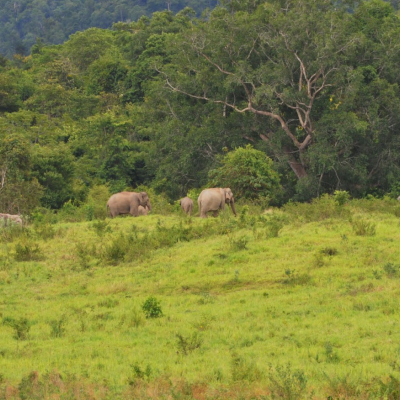
The site is located along the Thailand side of the Tenasserim mountain range, part of a north-south granite and limestone mountain ridge running down the Malay Peninsula. Located at the cross-roads between the Himalayan, Indochina, and Sumatran faunal and floral realms, the property is home to rich biodiversity. It is dominated by semi-evergreen/dry evergreen and moist evergreen forest with some mixed deciduous forest, montane forest, and deciduous dipterocarp forest. A number of endemic and globally endangered plant and wildlife species have been reported in the property, which overlaps with two Important Bird Areas (IBAs) and is noted for its rich diversity of birdlife, including eight globally endangered fauna species. © UNESCO
Summary
2025 Conservation Outlook
Finalised on
11 oct 2025
Good with some concerns
Current state and trend of VALUES
Low Concern
Overall THREATS
Overall PROTECTION and MANAGEMENT
Full assessment
Description of values
Diverse threatened and rare flora
Criterion
(x)
Kaeng Krachan Forest Complex (KKFC) is home to a large number of threatened and rare plant species, some of which are extinct elsewhere. Prunus kaengkrachanensis stands out as a rosaceous plant species discovered in 2015 and endemic to KKFC. Further critical species include Champi Doi (Magnolia gustavii), and Agarwood (Aquilaria malaccensis) and Kamettia chandeei of the dogbane family. The species Geostachys smitinandii of the ginger family is found only in the KKFC and the Dong Phayayen – Khao Yai Forest Complex Natural World Heritage site of Thailand. KKFC is also the world’s only home to the plant species Trichosanthes phonsenae from the cucumber family first discovered in 2003.
The site is characterised by six forest types, dominated by semi-evergreen, dry evergreen and moist evergreen forests and complemented by mixed deciduous forest, montane forest, and deciduous dipterocarp forest.
The site is characterised by six forest types, dominated by semi-evergreen, dry evergreen and moist evergreen forests and complemented by mixed deciduous forest, montane forest, and deciduous dipterocarp forest.
Globally important and threatened fauna
Criterion
(x)
KKFC maintains healthy populations of globally important and threatened wildlife species. A complete suite of top carnivores has been identified in the area, including eight species of Felidae: tiger (Panthera tigris), Fishing Cat (Prionailurus viverrinus), Leopard (Panthera pardus), Asian Golden Cat (Catopuma temminckii), Clouded Leopard (Neofelis nebulosi), Marbled Cat (Pardofelis marmorata), Jungle Cat (Felis chaus) and Leopard Cat (Prionailurus bengalensis).
KKFC stands out as one of the last few places where the Siamese crocodile (Crocodylus siamensis) is still present in the wild. It is home to the Sunda Pangolin (Manis javanica), Elongated Tortoise (Indotestudo elongata), Asian Giant Tortoise (Manouria emys) as well as Banteng (Bos javanicus), Asian Elephant (Elephas maximus), Dhole (Cuon alpinus), Asian Black Bear (Ursus thibetanus), Malay tapir (Tapirus indicus), Mainland Serow (Capricornis sumatraensis), Gaur (Bos gaurus) and Stump-tailed Macaque (Macaca arctoides). The site is also home to several other vulnerable species of birds and mammals.
KKFC stands out as one of the last few places where the Siamese crocodile (Crocodylus siamensis) is still present in the wild. It is home to the Sunda Pangolin (Manis javanica), Elongated Tortoise (Indotestudo elongata), Asian Giant Tortoise (Manouria emys) as well as Banteng (Bos javanicus), Asian Elephant (Elephas maximus), Dhole (Cuon alpinus), Asian Black Bear (Ursus thibetanus), Malay tapir (Tapirus indicus), Mainland Serow (Capricornis sumatraensis), Gaur (Bos gaurus) and Stump-tailed Macaque (Macaca arctoides). The site is also home to several other vulnerable species of birds and mammals.
Traditional culture, custom and ways of life of the Karen communities
Large numbers of people have traditionally inhabited and used areas, which are today national parks
or wildlife sanctuaries, applying also to the Karen communities in the KKFC area as inscribed on the WH List. The Karen people have a long-standing human-forest relationship through traditional and spiritual practices, and natural resource use for housing and farming (Tohsan and Thanachaitemwong, 2022).
or wildlife sanctuaries, applying also to the Karen communities in the KKFC area as inscribed on the WH List. The Karen people have a long-standing human-forest relationship through traditional and spiritual practices, and natural resource use for housing and farming (Tohsan and Thanachaitemwong, 2022).
Assessment information
KKFC WH site is not exempt from the common threats facing protected and conserved area in the region. Increasing roads, forest fires, and poaching are being recorded within and around the site, but the most serious threat derives from land conversion, encroachment and agriculture, with reports that this may have increased as a result of the COVID-19 pandemic due to the area being closed to tourism. Numerous measures are being reported to have been implemented on the ground by Thailand, and therefore current threats to KKFC can be considered to be relatively low.
Fire & Fire Management
(Forest fire)
Inside site
, Extent of threat not known
The 2015 IUCN Evaluation mission report identified fire as a significant conservation issue, with considerable variations in its impact on species, habitats and landscapes. It reported KKFC to contain fire-dependent ecosystems whilst there are other areas where fire will likely cause "destruction or loss of native species and habitats" (IUCN, 2015). The State Party of Thailand reports efforts to prevent and control forest fires in protected areas through an MoU between DNP (Department of National Park, Wildlife and Plant Conservation - an agency of the Ministry of Natural Resources and Environment) and the Department of Local Administration Promotion (State Party of Thailand, 2024).
Hunting, Collecting & Controlling Terrestrial Animals, Gathering, Harvesting & Controlling Terrestrial Plants & Fungi
(Poaching and illegal trade)
Select targeted species from taxonomy
Panthera tigris
Other targeted species names
Dalbergia cochinchinensis (Siamese rosewood)
Inside site
, Extent of threat not known
Poaching and their illegal trade has been reported as a threat in literature (e.g. Steinmetz et al., 2014) consistent with a large proportion of protected areas in southeast Asia and in Thailand. This includes wildlife as well as that of high-value wood species such as rosewood which is known to be taken illegally from within the KKFC area (IUCN, 2015; 2022). The State Party of Thailand has reported a drop in illegal hunting and poaching activities since enhancing their patrolling activities and implementing SMART monitoring (IUCN, 2015), and that remaining poaching activities could be attributed to subsistence poaching and less of commercial hunting (State Party of Thailand, 2014). Nonetheless, further efforts are needed to ensure park staff can adequately respond to the threat, including through community participatory management processes.
Annual & Perennial Non-Timber Crops
(Agriculture)
Inside site
, Widespread(15-50%)
Outside site
Agricultural activities are a threat within KKFC (State Party of Thailand, 2014) and increasing in the surrounding areas of KKFC (IUCN, 2022). Conversion, encroachment and expansion for agriculture is understood to be widespread and persistent (IUCN, 2015), exacerbating habitat fragmentation in an area where important habitats have been lost and degraded (WCS and DNP, 2009). There has also been a report that the COVID-19 pandemic lead to an increase in agricultural activities due to a decline in tourism, resulting in communities turning from tourism engagement to farming (Rathnayake et al. 2023).
Roads, Trails & Railroads
(Roads)
Outside site
Large parts of KKFC have a history of commercial logging, including for road construction, which has resulted in conflicts with traditional inhabitants (IUCN, 2022). A progressive increase in roads and tracks were also reported in the IUCN Evaluation report (IUCN, 2015) where satellite imagery showed an increase roads during 2000-2014, mostly within the eastern periphery of the buffer area.
The potential reservoir near the WH site, but within the Mae Nam Phachi Wildlife Sanctuary is the most pressing concern at present. Whilst Thailand has confirmed the project has not been authorised (as of December 2024) and that the necessary ESIA will be undertaken, the location within a strategically important area for ecological connectivity and its implication on the communities is of great concern. An application for a dolomite mine within the buffer zone of the site and only 1.4 km from the boundary is also of concern with protests and objections to the proposal from local communities due to feared impacts to the site.
Mining & Quarrying, Renewable Energy
(Proposed Nong Ta Dang (Purakam) reservoir; proposed dolomite mine)
Outside site
Nong Ta Dang reservoir is proposed within Mae Nam Phachi Wildlife Sanctuary. Whilst the location would have fallen within the originally proposed boundaries of the WH site, it falls just outside the WH site as it is inscribed today. The proposed reservoir if constructed will be located in a strategic location in terms of connectivity between important conservation areas in the north (WEFCOM) and the west (Myanmar), which is a conservation concern (IUCN, 2022) given the importance of this connectivity. The majority of the local Karen communities are reported to oppose the reservoir construction as it would entail yet another resettlement scheme, building on past evictions from other locations in KKFC (IUCN, 2022). Environmentally, the reservoir would lead to a loss of forest and wildlife habitats in the reservoir area, and the construction itself will cause a multitude of direct and indirect impacts from its large-scale and the degradation of aquatic and riparian ecosystems and habitats. Construction, including road works and other associated impacts will further exacerbate landscape fragmentation (IUCN, 2022). According to the State Party of Thailand, the reservoir has not yet been authorised and will be subject to an ESIA prior to any further actions (State Party of Thailand, 2024). However, the scale of impacts from the reservoir raises concern for the conservation of the site.
In addition, a dolomite mine within the buffer zone of the National Park has also raised concerns by locals due to its proximity to the WH site and potential for impacts on the values of the area. Mainland Serow and other protected species have been recorded on the proposed mine site and impacts on tourism along side environmental impacts from noise and air pollution have led to protests from local communities.
In addition, a dolomite mine within the buffer zone of the National Park has also raised concerns by locals due to its proximity to the WH site and potential for impacts on the values of the area. Mainland Serow and other protected species have been recorded on the proposed mine site and impacts on tourism along side environmental impacts from noise and air pollution have led to protests from local communities.
Invasive Non-Native/ Alien Species
(Invasive alien plants)
Invasive/problematic species
Eucalyptus camaldulensis
Leucaena leucocephala
Other invasive species names
Rubber plant
Inside site
, Localised(<5%)
Outside site
Invasive alien plant species are being reported in disturbed areas along the periphery of KKFC and in areas that have been converted to agricultural land, especially in the eastern part of KKFC (State Party of Thailand, 2014). While data on the precise extent of the threat could not be found for the purpose of this assessment, there is a potential for invasive alien plant species to spread further in light of continued threat from agricultural activities within and around KKFC.
Involvement of stakeholders and rightsholders, including indigenous peoples and local communities, in decision-making processes
Governance structures at KKFC have only recently begun to address the major gap concerning communities and their engagement in management. While new legislation since 2019 theoretically allows greater community involvement, in practice, the rights of these groups are not yet fully recognized or integrated into site management. Long-standing tensions and unresolved conflicts persist, particularly regarding land tenure, forced relocations, and lack of Free, Prior, and Informed Consent (FPIC). There are signs of progress through increased consultations, including with regards to the development of the revised Management Plan where public participation has been noted, and to include addressing livelihood issues in accordance with traditional community ways of life (State Party of Thailand, 2024).
Legal framework
DNP administers national parks and wildlife sanctuaries, and both national park and wildlife laws provide sufficient legal protection, each has distinct management objectives or primary emphases that have required operational clarification by the managing agencies (IUCN, 2015). Thailand’s legal framework includes updates to the National Parks Act and Wildlife Conservation and Protection Act (2019), which provide stronger conservation tools and some space for community participation. However, the laws are still rooted in exclusionary models of conservation, and their implementation often clashes with community rights. Legal mechanisms remain inadequate to fully safeguard both the site’s Outstanding Universal Value (OUV) and the rights of communities.
Governance arrangements
KKFC is governed by multiple agencies, primarily the Department of National Parks, Wildlife and Plant Conservation (DNP). While Protected Area Committees exist, they require consolidation and clearer mandates, particularly regarding meaningful community participation. The 2022 IUCN Advisory mission recommended establishing an overarching coordination mechanism and a strategic management plan for the entire forest complex and its buffer zone to improve coherence, accountability, and inclusiveness (IUCN, 2022).
Integration into local, regional and national planning systems (including sea/landscape connectivity)
Integration of KKFC into local, regional, and national planning systems remains limited. Although national-level recognition and environmental legislation provide a planning framework, effective horizontal and vertical integration is lacking. Efforts to define and implement a buffer zone, enhance ecological connectivity, and align with broader conservation strategies (such as WEFCOM and transboundary initiatives with Myanmar) are ongoing but not yet institutionalized within broader development and land-use planning frameworks (IUCN, 2022).
Boundaries
The boundaries of KKFC as inscribed on the WH List exclude ecologically critical areas along the Myanmar border, which were removed from what was originally proposed for diplomatic reasons. This weakened the site's integrity and connectivity. Additionally, a formal World Heritage buffer zone has not yet been established, despite previous proposals. The absence of a designated and managed buffer zone is a significant gap that undermines the protection of the site’s OUV.
Overlapping international designations
unknown
Implementation of World Heritage Committee decisions and recommendations
The State Party of Thailand has been highly responsive in responding to the Committee's Decisions of 2021 and 2023, leading to firm commitment to transboundary conservation and cooperation with the State Party of Myanmar. Following the recommendation of the 2022 IUCN Advisory mission to enhance protection to cover Kui Buri Forest Reserve - an ecological corridor between the Kui Buri National Park and Kaeng Krachan National Park - efforts are reported to be underway to expand the KKNP. The establishment of Protected Area Committees in all unit of the WH site to include community representatives is also a positive step for a more inclusive approach to management. A working group has also been created to establish a buffer zone for the WH site as requested by the Committee (State Party of Thailand, 2023, 2024).
Climate action
Research and data collection on climate change impacts on birds has been reported within KKFC (State Party of Thailand, 2014) but there is limited information available with regards to climate action overall.
Management plan and overall management system
The draft 2023-2027 Management Plan are reported to be in place for the 3 National Parks that comprise KKFC, with the Management Plan for Mae Nam Phachi Wildlife Sanctuary in progress (State Party of Thailand, 2023). An overarching Management Plan for the entire KKFC was recommended through the 2022 IUCN Advisory mission, which is reported to be underway through public participation (State Party of Thailand, 2024).
Law enforcement
While conservation laws are being enforced, enforcement has often come at the expense of community rights and human rights, particularly those of the Karen people. There is a gap between legal intent and on-the-ground practice, and human rights safeguards are not consistently applied. Enforcement measures are often exclusionary and contribute to mistrust and conflict.
Sustainable finance
The site receives national funding, and there are examples of partnership projects (e.g. UNDP Small Grants Programme) (IUCN, 2022). It is unclear whether financial resources are adequate from the available information. There is some concern over funding levels given the impact of COVI-19 and the reliance of National Parks in Thailand on tourism revenue. This is especially relevant for Mae Nam Phachi Wildlife Sanctuary given the restricted tourism numbers.
Staff capacity, training and development
DNP has experienced and committed personnel, and patrol-based enforcement (e.g. SMART) is being implemented. However, staff capacity for inclusive governance, participatory planning, and conflict resolution with local communities remains limited. Building staff capabilities in rights-based and co-management approaches is an urgent priority.
Education and interpretation programmes
Several education and outreach initiatives are reported (State Party, 2014; IUCN, 2022), including community outreach, visitor education at park centers, and collaboration with NGOs to raise awareness on conservation. However, these efforts are fragmented and not uniformly implemented across the entire forest complex. The scope and consistency of education on sustainable resource use, particularly tailored for local communities, could be strengthened.
Tourism and visitation management
Tourism management is present but varies in effectiveness across the KKFC. Areas like Kui Buri National Park are recognized for well-managed wildlife tourism, particularly elephant viewing, using zoning and controlled access. However, there is a lack of an overarching tourism strategy for the entire complex. Visitor pressure remains low in most parts of the site, particularly as was the case during COVID-19, but a comprehensive and inclusive tourism management plan is lacking.
Sustainable use
Legal mechanisms exist to regulate resource use, particularly through the 2019 legislation that theoretically allows for community participation in resource management. In practice, however, mechanisms for sustainable use, such as co-management or regulated collection of non-timber forest products (NTFPs), are underdeveloped and inconsistently applied. Tensions around community access and use persist, indicating that these mechanisms are not yet effectively institutionalized.
Monitoring
Monitoring is in place but needs to be more systematic and coordinated across the complex. The use of the SMART system for patrols and wildlife tracking (e.g. tigers, elephants) is noted, and population data for key species are collected periodically. However, comprehensive and ongoing ecological monitoring that aligns with the site's OUV is still limited and requires a unified monitoring framework for the entire KKFC.
Research
Some targeted research is taking place, including collaborations with universities and NGOs on biodiversity studies and human-wildlife conflict. However, research is generally ad hoc and not yet fully embedded in adaptive management. The 2022 IUCN Advisory mission and IUCN evaluation processes (2015-2021) highlighted the need for better integration of scientific research into decision-making, including socio-ecological studies to inform conflict resolution and community engagement strategies.
Effectiveness of management system and governance in addressing threats outside the site
Management efforts to address external threats, such as proposed infrastructure (e.g. dams and mining), agricultural encroachment, and deforestation in adjacent areas, are currently limited in effectiveness. While KKFC benefits from legal designations and cooperation among national and regional authorities, coordination mechanisms with local governments and stakeholders beyond the site boundaries are not fully institutionalized. The lack of a formal World Heritage buffer zone and unresolved land tenure issues further constrain the site’s ability to mitigate external pressures. Concerns over the proposed reservoir in the Mae Nam Phachi Wildlife Sanctuary and the proposed dolomite mine in the KK National Park Buffer Zone exemplify this gap in preventative governance.
Effectiveness of management system and governance in addressing threats inside the site
Inside the KKFC, enforcement of conservation laws is relatively robust, with patrols and monitoring (e.g. SMART system) implemented and some successes in controlling poaching and forest fires. However, governance remains a challenge with limitations on incorporating the rights of local communities. Additionally, fragmented management across KKFC's different components currently limits the coherence and adaptability of response strategies to internal threats such as illegal resource use and habitat degradation, but which should be a addressed through the overarching management plan that is under development through public participation.
The Kaeng Krachan Forest Complex benefits from a solid legal foundation, being composed of four legally gazetted protected areas under Thailand’s national conservation laws. It also enjoys formal recognition at national and regional levels, including its status as an ASEAN Heritage Park. Enforcement mechanisms, including patrolling and monitoring systems like SMART, are operational and have contributed to managing some on-site threats such as poaching and forest fires. However, overall management remains fragmented and reactive rather than strategic. An overarching management plan for the entire forest complex remains pending, and governance across the multiple units is not fully integrated. Importantly, the exclusionary approach to conservation has in the recent past generated serious concerns, particularly regarding the rights of communities. Issues such as forced relocations, lack of Free, Prior, and Informed Consent (FPIC), and limited stakeholder participation undermine social legitimacy and conflict resolution. Furthermore, the boundaries of the WH site omit important ecological areas, such as the area between KKFC and the Myanmar border, as well as the Kui Buri Forest Reserve. Buffer zone management is another notable gap, where a buffer zone has not been formalized, weakening the site's ability to address external threats such as land conversion or infrastructure projects like the proposed reservoir near Mae Nam Phachi Wildlife Sanctuary and the dolomite mine adjacent to KKNP. Financial and human resources appear stable at a basic operational level, but further capacity-building, particularly in participatory governance, community engagement, and conflict mediation is needed to ensure inclusive and adaptive management.
Diverse threatened and rare flora
Low Concern
Trend
Deteriorating
The 2021 IUCN Evaluation report, based on a 2014 comparative analysis due to the particular extended nomination process of this site, identified a diverse range of biogeographic and floral regions that overlap with KKFC. The flora of KKFC is characterised by 81 rare species, and 48 endemic species, including newly recorded species. These are very much still present within KKFC and have enjoyed the extra legal protection of the WH status. Nonetheless, the threat from encroachment and agriculture, especially on the periphery of the property remains high. Furthermore, new development proposals continue to pose pressure on the fragile ecosystem.
Globally important and threatened fauna
Low Concern
Trend
Data Deficient
Kaeng Krachan National Park alone is considered as one of the top 500 most irreplaceable protected areas in the world for the conservation of mammal, birds and amphibian species according to UNEP-WCMC and KKFC is home to 459 recorded species (IUCN, 2021). This remarkable range of mammals, birds and reptiles, while in a fragile ecosystem facing a range of threats, are currently being protected, including through enhanced monitoring and patrolling efforts since WH listing. Poaching nonetheless is still occurring, and human-wildlife conflicts, localised habitat loss and encroachment on the periphery of the property pose cumulative impacts on these wildlife populations. Recent population data were not available to the assessor to make an informed assessment on the trend.
Assessment of the current state and trend of World Heritage values
Deteriorating
KKFC remains one of Thailand's most biologically diverse protected area complexes, harbouring a large number of flora and fauna. They are however under increasing pressure from poaching, forest fires and land conversion, particularly along the peripheries of KKFC. Wildlife populations such as the Siamese crocodile and tiger are believed to persist in very small, vulnerable numbers. Monitoring efforts through activities such as SMART patrols are improving but remain insufficiently systematic across the whole WH site. The core areas of KKFC remain largely intact but strengthened protection, inclusive governance, ecological monitoring, and consideration of threats arising from developments adjacent to the site are needed to ensure the protection of the values of the site.
Assessment of the current state and trend of other important values
High Concern
Deteriorating
Karen communities in and around KKFC have maintained a rich cultural heritage rooted in traditional forest-based livelihoods, rotational agriculture, spiritual practices and deep ecological knowledge. However, their customary ways of life have come under increasing pressure from conservation policies and forced relocations.
Additional information
| № | Organization | Brief description of Active Projects | Website |
|---|---|---|---|
| 1 | International Union for Conservation of Nature (IUCN) Thailand Programme, Department of National Parks, Wildlife and Plant Conservation (DNP), Local authorities and local communities in the seven target communities | The project aims to restore degraded areas and safeguard conservation areas by planting at least 275,000 trees by 2026 within the Kaeng Krachan National Park, Thailand. The application of forest and landscape restoration (FLR) in the target areas will provide benefits to biodiversity, ecosystem services, and livelihoods of local communities in the target areas. The designed interventions have the following specific objectives: 1) Enhance the ecological functions of agricultural areas, riparian zones, and buffer zones by introducing agroforestry, reducing forest fragmentation, and improving ecological connectivity. 2) Address potential land use conflicts and prevent further deforestation rates within the national park boundaries. 3) Incentivize local communities to engage in long-term conservation and restoration of the forests and sustainable, biodiversity-friendly use of agricultural areas by developing sustainable financial mechanisms. |
https://www.mastercard.com/us/en/for-the-world/planet/priceless-planet.html
https://www.conservation.org/projects/tree-restoration-monitoring-framework-field-test-edition
|
References
| № | References |
|---|---|
| 1 |
IUCN (2015) IUCN Evaluation report for Kaeng Krachan Forest Complex, Thailand.
|
| 2 |
IUCN (2022) IUCN Advisory mission report: Kaeng Krachan Forest Complex, Thailand.
|
| 3 |
State Party of Thailand (2014) Nomination file for Kaeng Krachan Forest Complex, Thailand. https://whc.unesco.org/en/list/1461/documents/.
|
| 4 |
State Party of Thailand (2023) State of conservation report for Kaeng Krachan Forest Complex, March 2023. Summary of the report available at https://whc.unesco.org/document/199379.
|
| 5 |
State Party of Thailand (2024) State of conservation report for Kaeng Krachan Forest Complex, December 2024. https://whc.unesco.org/document/218509.
|
| 6 |
Steinmetz, R., Srirattanaporn, S., Mor-Tip, J. and Seuaturien, N. (2014) Can community outreach alleviate poaching pressure and recover wildlife in South-East Asian protected areas? Journal of Applied Ecology, 51, 1469-1478. doi: 10.1111/1365-2664.12239.
|
| 7 |
Tohsan, S. and Thanachaitemwong, W. (2022) Kaeng Krachan National Park, Thailand: Existing controversies in the spatial context. Journal of Arts and Humanities, 11(2):43.54. DOI: https://doi.org/10.18533/jah.v11i02.2257
|
| 8 |
WCS, DNP (2009). Restoring Tenasserim Corridor for Living Connectivity. Tenasserim Biodiversity Conservation Corridor Initiative. Supported by ADB. https://thailand.wcs.org/en-us/About-Us/Achieve-Project/Ten….
|