
Te Henua Enata – The Marquesas Islands

Country
France
Inscribed in
2024
Criteria
(iii)
(vi)
(vii)
(ix)
(x)
The conservation outlook for this site has been assessed as "good with some concerns" in the latest assessment cycle. Explore the Conservation Outlook Assessment for the site below. You have the option to access the summary, or the detailed assessment.
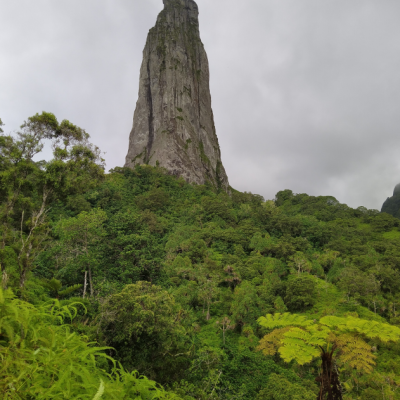
Located in the South Pacific Ocean, this mixed serial property bears an exceptional testimony to the territorial occupation of the Marquesas archipelago by a human civilisation that arrived by sea around the year 1000 CE and developed on these isolated islands between the 10th and the 19th centuries. It is also a hotspot of biodiversity that combines irreplaceable and exceptionally well conserved marine and terrestrial ecosystems. Marked by sharp ridges, impressive peaks and cliffs rising abruptly above the ocean, the landscapes of the archipelago are unparalleled in these tropical latitudes. © UNESCO
Summary
2025 Conservation Outlook
Finalised on
11 oct 2025
Good with some concerns
Current state and trend of VALUES
Good
Overall THREATS
Overall PROTECTION and MANAGEMENT
Full assessment
Description of values
Outstanding Scenery of the Isolated Island Archipelago
Criterion
(vii)
The Marquesas Islands are among some of the most isolated archipelagos in the world. The scenery, shaped by its volcanic history, stands out with its rugged and diverse topography dominated by sharp ridges, impressive peaks and cliffs reaching more than 1000m above sea level. These geological features are covered by lush and green vegetation (much of which consists of endemic flora). The dramatic nature of the landscape is further demonstrated through the direct interaction between the ocean and basalt cliffs providing an overwhelming sense of verticality. The 6 islands that make up the property are among the 20 most vertical islands globally (State Party of France, 2023).
Aggregations of Marine Species
Criterion
(vii)
The outstanding scenery of the terrestrial islands occurs alongside the diverse and productive oceanic environments. The oceans around the islands are home to significant concentrations of marine biodiversity and provide perfect opportunities to observe the natural beauty of wildlife. This include multi-species aggregations of Spinner dolphins (Stenella longirostris) with Melon-headed Wales (Peponocephala electra) - often hundreds of individuals, Reef Manta Ray (Mobula alfredi) and Oceanic Manta Ray (Mobula birostris) (Gannier, 2002).
Marine Isolation and Wilderness
Criterion
(ix)
The Marquesas Islands are recognised as one of the last remaining, largely in-tact marine wilderness areas globally. This isolation of the archipelago and its position as an 'oasis' within the equatorial Pacific, has led to the property being home to one of the highest fish biomasses in the world and a major centre of endemism.
Remarkable Levels of Endemic Plants, Fish, Molluscs and Terrestrial birds
Criterion
(x)
Of the 389 native terrestrial species found within the property, more than 50% are endemic to the islands (State Party of France, 2016). This includes 305 flora species, which has gained the property recognition as a centre of plant diversity. This is coupled with high levels of marine endemism within coastal fishes (13.7%), marine molluscs (10%) and marine crustaceans (9%) (State Party of France, 2016), This endemism is not restricted to the archipelago or island level, but also down to endemism at the single peak level.
Diversity of nesting seabirds
Criterion
(x)
The archipelago is home to one of the most diverse assemblages of seabirds in the tropical South Pacific, including a known breeding site for 21 species of seabirds (IUCN, 2024).
Customary Enata practices for the management of natural resources
Known as 'kahui', this is the system of traditional community-based management of natural resources implemented within the property. This is accompanied by other customary instruments such as 'tapu' which are restrictions that traditionally regulate access to certain areas and resources (State Party of France, 2023).
The Volcanic History of the Marquesas Islands
The Marquesas Islands are unique to other archipelagos in the Pacific due to their lack of surrounding coral reefs and presence of atypical volcanism consisting of incomplete shield volcanoes. The volcanoes are characterised by the frequency and importance of sectoral collapses, leading to the absence of typical summit calderas as in other volcanic islands (Maury et al, 2016).
Assessment information
The small human population and isolation of the Marquesas Islands means that the property is not subject to the threats common and widespread in many other World Heritage properties. Threats from Urbanisation and development, land-use change from agriculture and forestry, and unintentional fires remain very low. However, due to the unique and fragile nature of the archipelago's biodiversity, the property is highly succeptible to, and already impacted by, the threat of IAS. Despite the boundaries of the property including the most intact and preserved natural area on the islands, a significant number of invasive species exist, which have negatively impacted key endemic species and continue to do so. Climate change is also a continual and recurrent threat, which both produces impacts independently and intensifies the impacts of other threats, such as IAS. Impacts from reduced precipitation and ocean warming (driven by climate change) have already being observed in terrestrial and marine components of the property and there magnitude is expected to increase.
Invasive / Other Problematic Species, Genes & Pathogens, Invasive Non-Native/ Alien Species
(The Introduction and Dispersal of Invasive, Alien Species )
Invasive/problematic species
Castilla elastica
Chrysobalanus icaco
Eugenia uniflora
Falcataria moluccana
Flemingia strobilifera
Kalanchoe pinnata
Lantana camara
Leucaena leucocephala
Melinis minutiflora
Merremia peltata
Miconia calvescens
Passiflora maliformis
Psidium cattleianum
Rubus rosifolius
Schinus terebinthifolia
Spathodea campanulata
Sphagneticola trilobata
Syzygium cumini
Syzygium jambos
Tecoma stans
Acridotheres tristis
Bubo virginianus
Euglandina rosea
Mus musculus
Platydemus manokwari
Pycnonotus cafer
Rattus exulans
Rattus rattus
Trachemys scripta
Euglandina rosea
Felis catus
Capra hircus
Sus scrofa
Canis lupus
Other invasive species names
Waterhousea floribunda, Fucraea foetida, Acacia farnesiana, Diplazium proliferum
Inside site
, Throughout(>50%)
The threats of invasive alien species (IAS) is widespread across the property- significantly affecting the biodiversity on all but one island (Ua Huka) (State Party of France, 2023). There is a very high risk level associated with IAS due to the almost certain likelihood of IAS with the potential to (and already observed) major impacts on species biodiversity. The most recent revision of the IAS list for French Polynesia in 2016, listed 52 terrestrial species (39 plants and 13 animal species- this number is likely have increased since 2016 (State Party of France, 2016). The introduction and spread of the Black Rat has had significant impacts on the archipelago's seabird populations, e.g. the Fatu Hiva monarch seabird, Pomarea whitneyi, has suffered severe declines of almost 99% and is now classified as Critically Endangered (Ghestemme et al, 2019). The introduction of the carnivorous snail, Euglandina rosea, has also led to the severe declines and potential extinctions of several endemic terrestrial mollusk species, including the Samoana bellula, Samoana decussatula and Pilsbry’s Tree Snail (Samoana pilsbryi) (State Party of France, 2023).
Changes in Physical & Chemical Regimes, Changes in Temperature Regimes, Changes in Precipitation & Hydrological Regime
(Warming temperatures, sea level rises, reduced rainfall and ocean acidification)
Inside site
, Throughout(>50%)
Outside site
Climate change poses a very high risk to the values and attributes of the property (particularly the biodiversity values). Climate change impacts the entirety of the property and is driven by actions occurring outside of the boundaries of the property (the Marquesas Islands themselves contribute an extremely negligible amount to global greenhouse gas emissions) and the impact of the threat is projected to increase. Recent analysis from the UN WMO has projected strong likelihoods of below average rainfall for the archipelago, although near normal temperatures are likely (WMO, 2024). Ocean warming and acidification has resulted in coral reef bleaching events in the property. The state of coral reefs around the islands of Tahuata and Hiva Oa are considered to be significantly degraded with between 20 and 50% of colonies affected by bleaching (State Party of France, 2023). Climate change also has the potential to cause multiplying effects on other key threats such as aiding the dispersal and adaption of IAS and impacting vegetation already impacted by deforestation and fires. Although it is not clear whether climate change has caused altitudinal range shifts in the endemic species or changes in egg laying and migration patterns of seabirds- both are vulnerable to such changes.
Fire & Fire Management
(Impacts of Accidental Anthropogenic Fires)
Inside site
, Localised(<5%)
Continuous and regular fires no longer occur as they did previously. Occasional (primarily accidental) fires do occur, which can sometimes quickly to shift to large-scale forest fires impacting native and endemic vegetation, e.g. a recent fire in 2021 burnt 200 hectares of forest (although outside the property). The majority of fires are dealt with efficiently and remain under control.
Fishing, Harvesting & Controlling Aquatic Species
(Industrial Fishing and Bycatch outside of the property )
Outside site
Marine species are protected within the boundaries of the property through fisheries regulations which ban industrial fishing while allowing for artisanal fishing by local communities. However, industrial fishing does occur within the wider Pacific which impacts migratory or geographically widespread species, such as: Sperm Whale (Physeter macrocephalus, VU), Scalloped Hammerhead and Sphyrna lewini, CR) and Oceanic Whitetip Shark (Carcharhinus longimanus, CR) (IUCN, 2024).
Annual & Perennial Non-Timber Crops, Wood & Pulp Plantations, Terrestrial Animal Farming, Ranching & Herding
(Arable and Pastoral Agriculture )
Inside site
, Scattered(5-15%)
Agricultural pressure remains very low within the property, although land devoted to agriculture on the Marquesas Islands is the only area in French Polynesia which is increasing. Livestock from previous pastoral farming have become semi-wild and reproduced independently in some places leading them to impact native vegetation (these impacts are discussed under IAS) (State Party of France, 2023). Pine Plantations exist on the islands however do not occur within the boundaries of the property, but instead in the buffer zone.
Many of the biggest potential threats to the property already exist as threats currently but are projected to expand in magnitude or scope in the future (primarily IAS and climate change). Tourism is expected to increase following recent World Heritage designation, although will likely remain low pressure due to the geographical isolation of the Archipelago.
Invasive Non-Native/ Alien Species
(Invasive Alien Species)
Inside site
, Throughout(>50%)
Outside site
Due to increasing globalisation and tourism to isolated localities, the property (despite its isolation) remains vulnerable to the spread and potential naturalisation of new invasive alien species.
Changes in Physical & Chemical Regimes, Changes in Temperature Regimes, Changes in Precipitation & Hydrological Regime
(Climate Change)
Inside site
, Throughout(>50%)
Outside site
The impacts of climate change continue to be observed globally and projections show continued temperature rises and associated impacts such as changes on weather patterns. Therefore the impacts listed in current threats are likely to increase and grow.
Recreation & Tourism Areas
(Tourism numbers and visitation )
Inside site
, Scattered(5-15%)
Tourist numbers/visitation remains low (around 10,000 annual visitors) (IUCN, 2024), primarily on two islands and from cruise ships. This remains low pressure, although may increase with World Heritage designation and needs to be carefully monitoring and controlled- in relation to wastewater discharge, pollution and tourism facilities.
Involvement of stakeholders and rightsholders, including indigenous peoples and local communities, in decision-making processes
The inscription of the property had the widespread support of local residents and there remains very strong involvement across activities. The local, elected mayors of each inhabited island (hakaiki) have close relationships with local inhabitants and are able to raise their concerns as part of the Community of Municipalities of the Marquesas Islands (CODIM). The CODIM is jointly responsible for the management of the property with government ministries of French Polynesia and oversee the shared governance of the property and its buffer zones (State Party of France, 2023). Local World Heritage associations are currently being established on each island, and will have a seat on the site’s management committee (IUCN Consultation, 2025).
Legal framework
The legal framework of French Polynesia is sufficient to enable the long term preservation of the property's values through a combination of archipelago wide and island specific regulations. Within the Environmental Code of French Polynesia, there are provisions for area-based conservation of natural heritage (the property is covered by multiple protected area designations of various IUCN categories), as well as key species of importance. This code lists 164 species of plants, more than 40 species of animals, and all marine mammals (as well as turtles and rays) whose exploitation is prohibited (or heavily controlled) (DIREN, 2018). This is complemented by municipal prohibition orders isolated to specific islands within the archipelago. The French Polynesian Planning Code also provisions the creation of island-specific general development plans, although a property-wide general development plan is in preparation (State Party of France, 2023). French Polynesia sites within national French law as an overseas collectivity of the Republic of France with a degree of political and administrative autonomy.
Governance arrangements
The property appears to have robust governance arrangements in place involving various hierarchies of actors. The management of the property is shared jointly by national actors (Minister for Cultural, Environment and Marine Resources of French Polynesia) and regional and local actors (President of the Community of Municipalities of the Marquesas Islands- CODIM) through a management committee (State Party of France, 2023). This is also further strengthened by strong regulations at the federal French level (as French Polynesia is an overseas collectivity of France). There is very strong local involvement represented in governance by the involvement of each of the islands hakaiki (mayors) in the CODIM.
Integration into local, regional and national planning systems (including sea/landscape connectivity)
Management of the property is well integrated into local, regional and national planning systems, especially as the property consists of a large proportion of the Marquesas Island archipelago. Currently island specific spatial plans (general development plans, PGA) exist which regulate all activities in each island (including the components of the property on each island) (DCA, 2009, 2017). And archipleago wide PGA is being developed to incorporate the property and buffer zone as specific, unique zones within the plans, although is not in place at the time of the assessment (State Party of France, 2023). The management committee consists of local, regional and national representatives with a strong involvement of local communities. Management plans also extends to marine components.
Boundaries
The boundaries of the property include both marine and terrestrial components, for which the terrestrial components contain the most well preserved and representative parts of the ecosystem and biodiversity (as well as archaeological features). The boundaries are the final product of a significant and comprehensive participatory process involving technical experts and local communities. Buffer zones are present on the inhabited islands where pressures are greater and effectively allow for the buffering and monitoring of threats to the property. Buffer zones are not present, or required, on the uninhabited islands. The marine components lack a buffer zone, but may be designated as protected areas via the Environment Code of French Polynesia
Overlapping international designations
The property does not overlap with any other international designations
Implementation of World Heritage Committee decisions and recommendations
The property was inscribed only at the 46th session in 2024, and therefore the State Party has not had sufficient time to implement decisions.
Climate action
The OUV of the property is particularly susceptible to the threat of climate change. Climate change is an inevitable and intense threat to all Pacific Island and Small Island Developing States, and planning is often integrated across environmental, development and general activities. Actions relate primarily to adaptation rather than mitigation due to the negligible contributions of the archipelago to global greenhouse gas emissions. Climate change is not considered as an independent management action within the management plan, but integrated into other sections. This is the same for monitoring, e.g. the impacts of climate change are monitored via coral bleaching events (State Party of France, 2023). At the territorial level, the French Polynesia Climate Plan 2030, adopted in December 2024, helps guide local efforts to deal with climate change (IUCN Consultation, 2025).
Management plan and overall management system
The property has a long term management plan (until 2039) which clearly identifies the key threats facing the property and aligned management actions. It has been created specifically for the purpose of World Heritage management and there is sufficient technical and resource capacity to do this, including the strong involvement of local communities.
Law enforcement
It appears that law enforcement is adequate although limited information is available. The majority of threats to this property do not relate to anthropogenic activities and therefore do not require law enforcement.
Sustainable finance
The State Party has calculated the capital required to implement the actions of the management plan. The majority of existing funding for the management of the property comes from the government of French Polynesia- and this appears to be sustainable and secure in the long term. The property also benefits from being a French Overseas territory and funding is supplemented by programs from the French Office for Biodiversity (OFB), French Agency for Development (AFD) and European Union (EU). However, this could still be further improved.
Staff capacity, training and development
A coordination unit has been created specifically for the management of the property which includes the appointment of a coordinator. An additional coordinator is expected to be hired within the Government of French Polynesia- although it is unclear whether the latter position is already in place (State Party of France, 2023). The coordination unit is supported by technical capacity within the management agencies of French Polynesia. However, capacity of the coordination unit should be further strengthened. To help address this, the Department of Culture of French Polynesia intends to establish a subdivision-level position based in the Marquesas, this process is currently underway (IUCN Consultation, 2025).
Education and interpretation programmes
Due to very extensive, multi-year stakeholder engagement and small populations, almost all local residents are aware of the World Heritage status of the property as well as key protection and management requirements due to traditional stewardship practices. Education, particularly of the younger generation, is a specific action point within the management plan and involves raising awareness among primary and middle school-aged children of the heritage of the Marquesas Islands. This includes plans to create a specific secondary school course on World heritage in Iles Marquises (State Party of France, 2023).
Tourism and visitation management
A tourism policy that is compatible with the World Heritage values of the site is currently in included as one of four strategic objectives within the management plan. Tourism is limited currently (10,000 visitors annually) and although there are plans to double tourism numbers, this is expected to consider World Heritage requirements, including tourism infrastructure outside of the property boundaries (State Party of France, 2023). Improving tourist information and interpretation is another objective within the management plan. In line with the Fāri’ira’a Manihini 2027 (FM27) strategy adopted in 2022, French Polynesia has also launched the development and implementation of a sustainable tourism programme, which supports efforts to ensure that tourism growth in the Marquesas islands remains respectful of cultural and natural values.
Sustainable use
Resource use is not considered a threat to the values of this property, and mechanisms for sustainable use of resources by local communities, such as artisinal fishing, are observed in both local and national legislation. Sustainable resource use is also governed through traditional stewardship practices which work to self-regulate key biodiversity and marine resources through temporary no-take zones among other measures.
Monitoring
The monitoring plan is clear, focussed specifically on the values and attributes for which the property is inscribed. Key biological, ecological and physical characteristics will be monitored, alongside the use of volunteer networks to supplement traditional monitoring- although it is unclear whether these are already in place.
Research
There is adequate and up to date knowledge available to guide the management of this property, and much was also developed recently during the process of nomination. To date, this research has been carried out by both national institutions of French Polynesia, academic partners- primarily the University of French Polynesia, and federal french bodies including the federal Office for Biodiversity. Within the management plan, there is a specific objective relating to the inventory of research data on natural and cultural heritage, which is already in process.
Effectiveness of management system and governance in addressing threats outside the site
The management system appears likely to be effective in addressing threats outside of the property, including through increased surveillance and biosecurity measure of incoming threats, such as invasive alien species. There are measures within the management plan to address such threats, to complement those in existing legal frameworks. However, as the property was only recently inscribed at the 46th session of the World Heritage Committee in 2024, the management system or plan has now been implemented at the time of assessment
Effectiveness of management system and governance in addressing threats inside the site
The management system appears likely to be effective in addressing threats inside of the property, including through invasive species control, etc. There are measures within the management plan to address such threats, to complement those in existing legal frameworks. However, as the property was only recently inscribed at the 46th session of the World Heritage Committee in 2024, the management system or plan has now been implemented at the time of assessment.
Overall, the protection and management regime appears to be effective. An up to date and long-term management plan is in place which includes key points for the management of primary threats, monitoring of the property and additional actions. The management plan occurs within a robust legal framework of various levels. Despite this, there are a number of external threats which are beyond the control of the management authority, namely climate change and the control of IAS will require a full society approach extending beyond the remit of the management authority to other government and private actors, e.g. shipping, tourism, fisheries.
Outstanding Scenery of the Isolated Island Archipelago
Good
Trend
Data Deficient
The vegetation, geomorphology, and landscapes which produces the dramatic scenery of the archipelago remain largely in-tact and in a good state and the overall condition is stable. Previous uncontrolled and anthropogenic forest fires now occur less frequently, as does native vegetation conversion to aboriculture and agriculture, although they do still occur and should be monitored closely (Huebert and Allen, 2020).
Aggregations of Marine Species
Good
Trend
Data Deficient
High productivity of the archipelago has remained enabling healthy aggregations of manta rays. Surveys suggest high abundances and widespread distributions of a number of ray species in the Marquesas Islands (Mourier, 2012). Whaling and small cetacean hunting had previously occured in the archipelago, but has not occured for a long time. Marine mammal populations are also intact and various surveys have confirmed presence, distribution and density of such species, although they remain largely understudied (IMMA, 2021).
Marine Isolation and Wilderness
Good
Trend
Data Deficient
The marine isolation and wilderness of the archipelago remains in good condition with limited tourism numbers annually and controlled and sustainable fishing.
Remarkable Levels of Endemic Plants, Fish, Molluscs and Terrestrial birds
Low Concern
Trend
Data Deficient
Historically due to the spread of IAS, many endemic species have become extinct or population reduced substantially, however due to government and community interventions and control measures the impacts and populations of several species (such as the Marquesas Kingfisher) have started to stabilize (Birdlife International, 2025). These efforts include eradication efforts of key invasive predators and flora from certain component parts. Lowland forest areas have been largely degraded (however these are absent from the property boundaries) and those habitats within the boundaries remain largely in-tact (CEPF, 2007). However the impact of IAS on endemic species remains of concern.
Diversity of nesting seabirds
Low Concern
Trend
Data Deficient
All 21 species of seabirds remain present within the property, although breeding colonies and populations have decreased due to the spread of IAS which is of concern. E.g. the endemic Fatu Hiva monarch has suffered sharp population declines as a result of the presence of invasive black rat populations. Conversely, invasive predator eradication efforts have been successful in several component parts of the property, such as Ua Pou which has now been declared rat-free and may allow for population to recover (SPREP, 2024).
Assessment of the current state and trend of World Heritage values
Data Deficient
This property was inscribed at the 46th Session of the World Heritage Committee in 2024 and therefore the values and attributes remain in the same distribution and condition as the time of inscription. The aesthetic beauty (composed of landscapes, geomorphology and marine aggregations) are in good-condition and likely to persist in such a condition for the foreseeable future. The property contains the most high-integrity and in-tact remnants of upland forests and these are well protected and in good-condition. The significant diversity of endemic species remain present, although IAS remain a significant concern and several species continue to decline due to their impact. Eradication efforts have been successful to date and populations of certain endemic and seabird species have started to stabilise.
Assessment of the current state and trend of other important values
Data Deficient
Data Deficient
Customary and traditional sustainable use measures continue to be utilised and the volcanic history of the archipelago is likely to remain in a good condition, although limited information is available.
References
| № | References |
|---|---|
| 1 |
BirdLife International (2025) Species factsheet: Marquesas Kingfisher Todiramphus godeffroyi. Available at: https://datazone.birdlife.org/species/factsheet/marquesas-k… [Accessed 07/01/25]
|
| 2 |
CEPF (2007). Ecosystem Profile: Polynesia/Micronesia Biodiversity Hotspot. Critical Ecosystem Partnership Fund, Washington DC, USA.
|
| 3 |
Environmental Code of French Polynesia [online] French Polynesia, France. Direction de l'Environnement de la Polynesie Francaise. Available at: https://www.service-public.pf/diren/partager/code/ [Accessed 07/01/2025]
|
| 4 |
GHESTEMME, T., MATOHI, A., BLANVILLAIN, C., PORTIER, E., BARH, M. L., & O’BRIEN, M. (2019). Catastrophic decline and subsequent conservation management of the Critically Endangered Fatu Hiva Monarch Pomarea whitneyi in the Marquesas Islands (French Polynesia). Bird Conservation International, 29(4), 598–615.
|
| 5 |
Gannier, A. (2002). Distribution of Cetaceans off the Marquesas Islands (French Polynesia) as obtained from a small boat dedicated survey. Aquatic Mammals, 28(2): 198-210.
|
| 6 |
IUCN (2024). World Heritage Nomination - IUCN Technical Evaluation, Te Henua Enata- Les Iles Marquises (France). In: IUCN World Heritage Evaluations 2024, IUCN Evaluations of nominations of natural and mixed properties to the World Heritage List. WHC/24/46.COM/INF.8B2. [online] Gland, Switzerland: IUCN, pp. 93-105. Available at: https://whc.unesco.org/document/208485 [Accessed 07/01/2025]
|
| 7 |
IUCN-Marine Mammal Protected Areas Task Force (2021). Marquesas Archipelago IMMA Factsheet. Available at: https://www.marinemammalhabitat.org/wp- content/ uploads/imma-factsheets/PacificIslands/marquesasarchipelago-PacificIslands.pdf. [Accessed 07/01/2025].
|
| 8 |
Jennifer M. Huebert, Melinda S. Allen. (2020). Anthropogenic forests, arboriculture, and niche construction in the Marquesas Islands (Polynesia), Journal of Anthropological Archaeology (57)
|
| 9 |
Maury, R.C., Guille, G., Guillou, H., Chauvel, C., Legendre, C., Rossi, P., Blais, S., Pallares, C., Marabal, A.-M. (2016). Les Marquises : des sites géologiques exceptionnels issus d’un point chaud atypique . Chap. 3, 38 p. In : R. Galzin (Ed) Biodiversité terrestre et marine des îles Marquises, Polynésie française. Paris : Société Française d’Ichtyologie, pp. 526
|
| 10 |
Mourier, J. (2012). Manta rays in the Marquesas Islands: first records of Manta birostris in French Polynesia and most easterly location of Manta alfredi in the Pacific Ocean, with notes on their distribution. Journal of Fish Biology.
|
| 11 |
PGA des Iles Marquises [online] French Polynesia, France. Direction de la construction et de l'amenagement. Available at: https://www.service-public.pf/dca/pga-marq/ [Accessed 07/01/2025]
|
| 12 |
SPREP (2024). Encouraging update on Seabird Conservation in Ua Pou, Marquesas, One Year Post Rat Eradication Efforts (online). Available at: https://www.sprep.org/news/encouraging-update-on-seabird-co… [Accessed: 07/01/2025]
|
| 13 |
State Party of France (2023). Nomination of Te Henua Enata- Les îles Marquises. [online[ French Polynesia, France: MINISTÈRE DE LA CULTURE, DE L’ENVIRONNEMENT, DES RESSOURCES MARINES, pp. 1-759. Available at: https://whc.unesco.org/document/198959 [Accessed 07/01/2025]
|
| 14 |
Te Henua Enata - Les Iles Marquises Plan de Gestion. [online] French Polynesia, France: Ministere de la Culture, de l'Environnement, des Ressources Marines, Office Francais de la Biodiversite, Les Portes, pp. 1-231. Available at:https://whc.unesco.org/document/200841 [Accessed 07/01/2025]
|
| 15 |
World Meteorological Organisation (2024). WMO Lead Centre for Long-Range Forecast Multi-Model Ensemble. Available at: https://wmolc.org/ [Accessed 07/01/2025]
|