How are Conservation Outlook Assessments prepared and approved?

The first step in preparing Conservation Outlook Assessments is to gather existing information on every natural World Heritage site. This data is mobilised through IUCN's World Heritage Team, the IUCN World Commission on Protected Areas, IUCN's network of member organisations and expert Commissions (such as the IUCN Species Survival Commission), and consultation with key knowledge-holders, including local stakeholders, management authorities and site managers where possible.

This information is compiled and assessed by independent experts according to a standardised methodology to ensure consistency. These assessments are subsequently reviewed internally to verify that they meet the required standards. Inputs are then sought from external peer reviewers, followed by review from IUCN’s operational regions through Regional Review Groups. These groups are composed of IUCN regional staff, WCPA and SSC Regional Vice-Chairs and other local World Heritage experts. Site managers are invited to fact check and provide comments and updates, which are considered for the final version of the assessment. Conservation Outlook Assessments are given final approval by the IUCN World Heritage Panel before they are published.
>> Learn more about the consultation process

What are Conservation Outlook Assessments?

Conservation Outlook Assessments are a projection of the potential for a natural World Heritage site to conserve its values over time, based on a desk-based assessment of three elements:

1.    The current state and trend of a sites' natural World Heritage values and underlying attributes
2.    The threats affecting those values conveyed by their key attributes
3.    The effectiveness of protection and management

The assessments are compiled by independent experts, including members of IUCN's World Commission on Protected Areas (WCPA), and then undergo a rigorous peer-review process. They draw on published information and knowledge provided by IUCN members, partners, site managers and communities. Conservation Outlook Assessments also include additional information on active conservation projects in sites, and on the ecosystem services and benefits provided by sites to people.

Which World Heritage sites are assessed in the IUCN World Heritage Outlook?

The IUCN World Heritage Outlook assesses all World Heritage sites that have been inscribed on the World Heritage List under natural criteria. In cases of mixed sites (natural and cultural), only the natural values are comprehensively assessed for IUCN's Conservation Outlook Assessments. Other important biodiversity values and other important values, including cultural and geological values are captured through the Conservation Outlook Assessments but not assessed in-depth and they do not affect the conservation outlook rating. 

What methodology is used?

The standardised methodology was developed by IUCN in 2011 by an IUCN-led technical advisory group involving IUCN specialists and WCPA members, UNEP World Conservation Monitoring Centre staff and World Heritage site managers. Later that year, a pilot was developed for the Arab States to test its validity, and in 2014 the first assessment cycle was launched for all sites, followed by an update in 2017.

The methodology is based on a number of existing protected area assessment methodologies, which reflect IUCN's best practice approaches to protected areas, adapted specifically to World Heritage sites. It builds on methodologies and lessons learned from a number of sources, including the Great Barrier Reef Outlook Report, the Enhancing Our Heritage Toolkits, the Managing Natural World Heritage Manual, and the World Heritage Periodic Reporting questionnaire (Cycles I-III).

Prior to each new assessment cycle, the methodology is further refined by IUCN based on feedback collected during the previous assessment cycle. This adaptive approach to the methodology is intended to enable the improvement of the IUCN World Heritage Outlook methodology over time, but in a manner that ensures assessments are consistent and comparable between cycles.

>> Learn more about the methodology

How does the IUCN World Heritage Outlook relate to IUCN's official advisory work under the World Heritage Convention?

The IUCN World Heritage Outlook is different from the work IUCN does as an Advisory Body under the World Heritage Convention, but complements that work. The IUCN World Heritage Outlook is an independent knowledge tool produced by IUCN that aims to support World Heritage site managers and management authorities, government and NGO members of IUCN, and IUCN specialists and partners.

The IUCN World Heritage Outlook does not replace any of the monitoring systems under the World Heritage Convention, but it helps improve IUCN's work in supporting those systems. It complements the World Heritage Convention's Reactive Monitoring system – which is applied only to sites where problems have been identified – by providing an assessment of all sites, and therefore also recognizing well-managed sites and their conservation efforts.

Any new information identified through the IUCN World Heritage Outlook, which should be brought to the attention of the World Heritage Committee, will be communicated to UNESCO by IUCN. The World Heritage Outlook thus enables IUCN to be more proactive, systematic and transparent in its advice to States Parties and the UNESCO World Heritage Committee.

>> Learn more about IUCN's Advisory Body role

What is the purpose of the IUCN World Heritage Outlook?

The purpose of the IUCN World Heritage Outlook is to track the status of all World Heritage sites inscribed for their natural values, recognize excellence in their conservation and identify the actions needed to protect these exceptional sites.

What is the IUCN World Heritage Outlook?

The IUCN World Heritage Outlook provides the first comprehensive global assessment of the conservation prospects for natural World Heritage. The system has been developed by IUCN (International Union for Conservation of Nature) together with IUCN's World Commission on Protected Areas (IUCN WCPA).


The IUCN World Heritage Outlook assesses World Heritage sites inscribed for their natural values every three-five years through Conservation Outlook Assessment updates, available online on this website. The results of assessments are also analysed and presented in a global report issued at the same time as the assessment updates. The fourth edition of the IUCN World Heritage Outlook will be published on this website in October 2025.

>> Learn more about the IUCN World Heritage Outlook

2014-05-02
IUCN’s evaluations of 10 sites nominated to obtain World Heritage status are now public ahead of the upcoming World Heritage Committee meeting. In addition, the first batch of State of Conservation reports, prepared jointly by IUCN and the World Heritage Centre, has been released.
2014-05-27
The new IUCN World Heritage Outlook is released to the IUCN network today ahead of its official launch at the annual World Heritage Committee meeting next month. This innovative knowledge tool will provide for the first time assessments of all 222 sites inscribed on the World Heritage List for their natural Outstanding Universal Value.
2014-07-10
Delegates from over 100 governments met last month in Doha during the 38th World Heritage Committee meeting to take decisions on new and existing World Heritage sites. As usual, IUCN experts were there to give advice on natural World Heritage and the action needed to assure its conservation. The outcomes of the meeting are now available online in English and French.
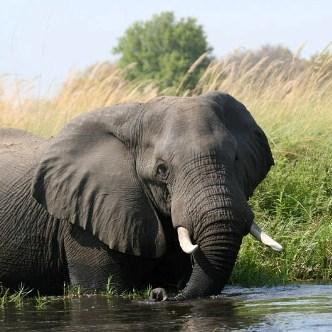
Okavango Delta